Why Does My Toddler Listen to Everyone But Me? (+ 3 Quick Fixes)
Water Play for Toddlers: 15 Backyard Ideas That Cost Under $10
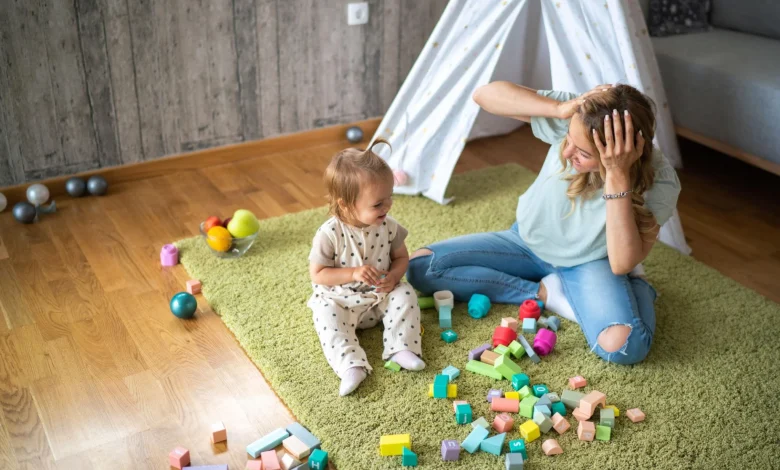
- Why does my toddler listen to daycare/teachers/Grandma but not me?
- The “safe person” effect: what attachment theory actually says
- Why strangers and other caregivers seem to have “magic” authority
- How to turn your “safe person” status into cooperation, not chaos
- Is my toddler ignoring me on purpose or can they actually not hear me?
- What’s normal “selective hearing” vs. true ignoring
- The 5-second attention test you can do at home
- When to call the pediatrician for a hearing or language screen (AAP red flags)
- What exact words and steps work when my toddler won’t listen?
- The 4-part “Safe Leader” script (get close, one verb, wait, follow through)
- 10 real-life scripts: shoes, cleanup, leaving the park, bedtime, and more
- What to say in front of others when you’re embarrassed and they’re refusing
- When should I worry? Hearing, language, and developmental red flags
- Age-by-age listening expectations (18 months, 24 months, 3 years)
- Signs it’s more than “typical toddler defiance”
- How to prepare for the pediatrician visit (what data to bring)
- How long does it take to see change once I stop repeating myself?
- The 2-week “pattern reset” timeline: what to expect day 1–14
- Why it gets worse before it gets better (the “extinction burst”)
- How to track progress so you don’t quit too soon
- What Real Parents Say
- Quick Checklist: 7 Things That Make a Toddler Listen More (and 5 That Make It Worse)
- Frequently Asked Questions
- Why does my toddler listen to everyone but me?
- Why does my child behave for everyone but me?
- Is it normal for a toddler to ignore parents?
- At what age should a toddler follow instructions?
- How do I get my toddler to listen without yelling?
Medical Disclaimer: This article is for general parenting education only and is not a substitute for professional medical advice. If you’re worried about your child’s hearing, language, or development, talk to your pediatrician.
Last night my son ignored me four times in a row. I asked him to put his shoes in the basket, and he kept building his block tower like I hadn’t said a word. Twenty minutes later, my mother-in-law walked in, said “shoes, please,” and he sprinted across the room to do it. I stood there feeling like a failure in my own home.
If you’ve watched your toddler snap to attention for a teacher, a grandparent, or even a total stranger while ignoring you completely, you’re not imagining it, and you’re not doing anything wrong. In fact, you’re probably asking yourself: Why does my toddler listen to everyone but me?
There’s a specific psychological reason your toddler saves the hardest behavior for you, and once you understand it, the fix isn’t about being stricter. It’s about becoming what child development researchers call a “safe leader” instead of just a safe person.
This is part of our Complete Toddler Behavior Guide series, once you understand the pattern here, the full guide walks through it across every age and stage.
Why your toddler listens to everyone but you comes down to attachment science: you are their safe base. They trust you enough to release pent-up stress and fall apart in your presence. This behavior isn’t disrespect; it’s a physiological compliment. Instead of louder discipline, the effective fix is using close-contact, one-step instructions delivered calmly. By consistently following through every single time, you teach your toddler that you mean what you say.
Why does my toddler listen to daycare/teachers/Grandma but not me?
Your toddler behaves better for other caregivers because those relationships don’t carry the same emotional weight as their bond with you. With you, your child feels safe enough to show their full, unfiltered self, including the whining, stalling, and outright refusal. With a teacher or grandparent, there’s a layer of social caution that keeps behavior in check, because that relationship hasn’t earned the same depth of trust yet.

The “safe person” effect: what attachment theory actually says
Attachment researchers John Bowlby and Mary Ainsworth described the parent-child bond as a “secure base”, the person a child can explore the world from and return to when things feel overwhelming. That return often looks like meltdowns, defiance, and selective deafness, because your toddler’s nervous system has decided you’re the one relationship sturdy enough to absorb the mess.
This isn’t a parenting failure showing up in your child’s behavior. It’s the opposite. Toddlers reserve their worst behavior for the adult they trust the most, which is a strange kind of compliment that doesn’t feel like one at 5pm on a Tuesday.
If meltdowns are the main way this shows up in your house, our guide to emotional regulation strategies for toddlers walks through age-by-age techniques for the moment itself.
Why strangers and other caregivers seem to have “magic” authority
Teachers and grandparents also tend to use fewer words, less negotiation, and more consistent follow-through than exhausted parents do by the end of the day. A teacher says “shoes on” once and moves the group forward. A parent says “shoes on” six times while also answering a work text and stepping over a sibling fight. The authority isn’t magic, it’s structure and follow-through, which toddlers read instantly.
This is also the reason so many parents search toddler listens to dad not mom (or the reverse). It’s rarely about which parent is “stricter.” It’s almost always about which parent gives fewer, calmer, more consistently enforced instructions, and that pattern is learnable by either parent, not fixed by personality.
How to turn your “safe person” status into cooperation, not chaos
You don’t lose your safe-person status by adding structure, you actually strengthen it. A “safe leader” gives short, warm instructions and follows through calmly every time, so your toddler learns that safety and structure can exist in the same relationship. That combination is what daycare and grandparents already have, and you can build it too.
Is my toddler ignoring me on purpose or can they actually not hear me?
Most toddler “ignoring” is a mix of selective attention and developmental limits, not defiance or a hearing problem, but it’s worth ruling out. Toddlers under 3 genuinely struggle to shift attention on command, especially mid-play, so a request that feels ignored is often just a request that never fully landed.
What’s normal “selective hearing” vs. true ignoring
Selective hearing looks like this: your toddler is deep in play, you call out an instruction from across the room, and nothing registers because their attention is fully absorbed elsewhere. True ignoring, by contrast, usually involves eye contact, your child looks right at you and does the opposite anyway. Both are developmentally typical. Neither one means something is wrong with your child or your parenting.
If you’ve ever wondered why does my toddler ignore me but listens to grandma, this is usually the answer: Grandma is asking for less, closer, and following through more consistently, not because she has more authority, but because the exchange with her hasn’t accumulated the same emotional history that yours has.
The 5-second attention test you can do at home
Before assuming defiance, try this: get down to your toddler’s eye level, say their name, wait for them to look at you, then give one instruction. If they follow through most of the time under these conditions, hearing and comprehension aren’t the issue, the delivery was. If they consistently don’t respond even with full attention and eye contact secured, that’s worth mentioning at their next well-child visit.
When to call the pediatrician for a hearing or language screen (AAP red flags)
According to the CDC, a toddler should be able to follow one-step instructions without gestures by 18 months, such as handing you a toy when you say “give it to me,” and by 2 years old should manage two-step instructions like “pick up your shoes and put them in the closet.” The American Academy of Pediatrics recommends developmental and autism screening at the 18-month and 24-month well-child visits as standard practice, not just when a concern comes up.
Bring it up with your pediatrician if your toddler consistently doesn’t respond to their name, doesn’t follow one-step directions by 18 months even with full attention, or seems to lose language skills they previously had. Those are the moments to ask for a formal hearing or developmental screen rather than assuming it’s a discipline issue.
What exact words and steps work when my toddler won’t listen?
The words that work are short, close, and followed through not repeated, not shouted, and not asked as a question. Toddlers respond to instructions that arrive as calm, one-step statements delivered within arm’s reach, paired with a parent who follows through instead of re-asking.
The 4-part “Safe Leader” script (get close, one verb, wait, follow through)
In our home, this is the script that changed everything, and it only has four steps:
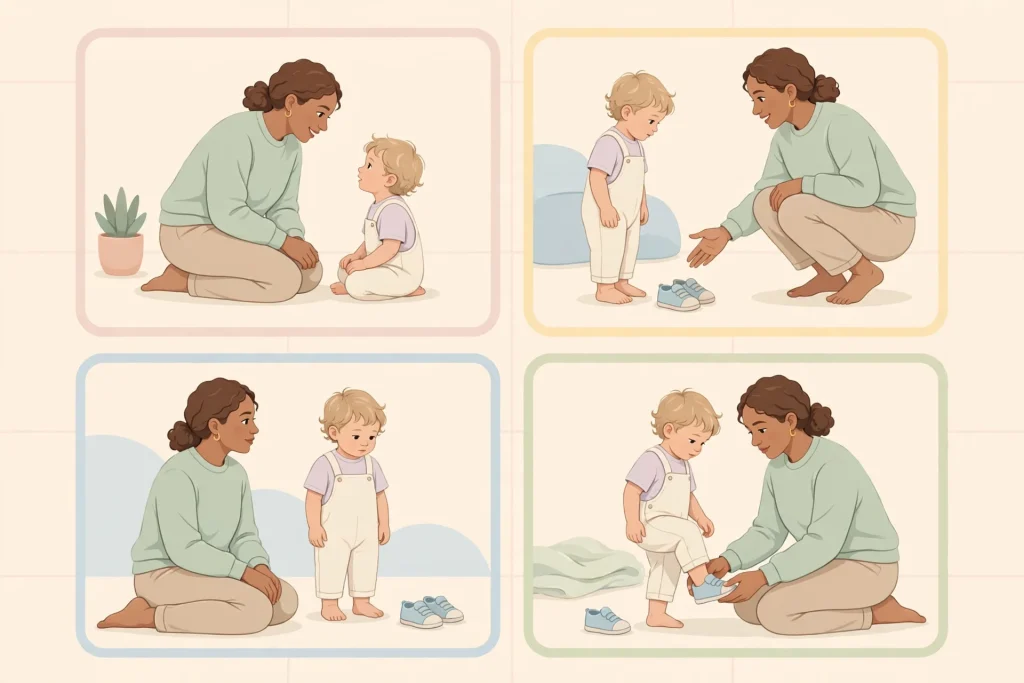
- Get close. Walk over to your toddler instead of calling out. Physical proximity does more than volume ever will.
- One verb. Skip the explanation and the “please.” Say “shoes on” instead of “can you please go get your shoes so we’re not late again”
- Wait three seconds. Toddlers need a beat to process language. Resist the urge to repeat immediately.
- Follow through. If nothing happens, guide their hands through the motion calmly. No lecture, no anger just quiet, consistent follow-through.
10 real-life scripts: shoes, cleanup, leaving the park, bedtime, and more
- Shoes on: “Shoes on now” Then hand them over.
- Cleanup: “Toys in the bin” Then start placing one toy in yourself.
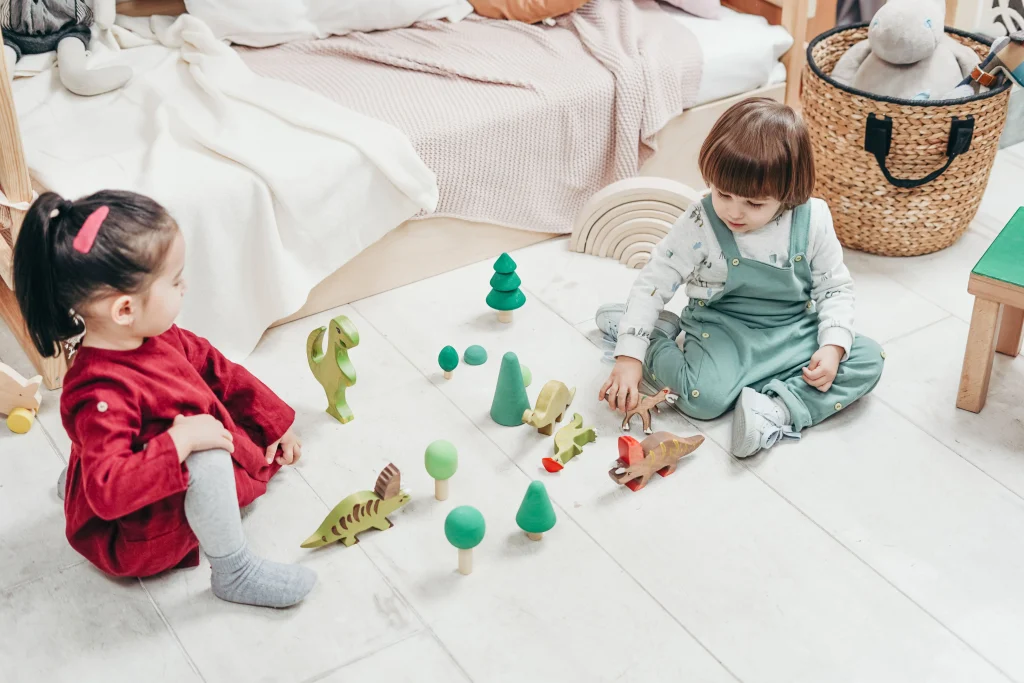
- Leaving the park: “Two more slides, then we go” Then follow through when the count hits zero.
- Bedtime: “Books, then bed” No negotiation on the order.
- Getting in the car seat: “Sit here” Then guide gently if needed.
- Brushing teeth: “Open wide” Skip the ten-minute debate.
- Washing hands: “Hands under water” Then help physically if ignored.
- Table manners: “Bottom on chair” Repeat calmly, don’t escalate.
- Sharing a toy: “Two more turns, then hand it over” Count out loud.
- Getting dressed: “Arm in sleeve” Guide the motion if they stall.
What to say in front of others when you’re embarrassed and they’re refusing
When your toddler melts down in public and you’re the only one who seems to get the defiant version, the instinct is to over-explain to the strangers watching. Skip that. Your own calm is doing as much work as your words here, if staying regulated in that moment is the hard part, our piece on nervous system regulation for parents has resets you can use in the seconds before you kneel down. Kneel down, say your one-verb instruction quietly, and follow through, even if it means physically carrying a screaming toddler to the car. Onlookers forget this in five minutes.
When should I worry? Hearing, language, and developmental red flags
Most toddler defiance is typical, but a small set of signs, no response to name, no words by 18 months, or losing skills they used to have, are worth a same-week call to your pediatrician rather than a wait-and-see approach.
Age-by-age listening expectations (18 months, 24 months, 3 years)
According to CDC developmental milestones, most 18-month-olds follow one-step instructions without gestures, such as sitting down when told “sit down.” By 24 months, most toddlers can manage two-step instructions, like fetching an object and placing it somewhere specific. By age 3, following two- and three-step directions and understanding simple stories is typical. These are averages, not deadlines, some toddlers hit them a few weeks early or late and are still perfectly on track.
Signs it’s more than “typical toddler defiance”
Watch for a pattern rather than a single bad day: no response to their name being called across a quiet room, no words at all by 18 months, or losing a skill like a word they used to say, that they previously had. Any one of these, especially the loss of a previously mastered skill, is a reason to talk to your pediatrician sooner rather than later.
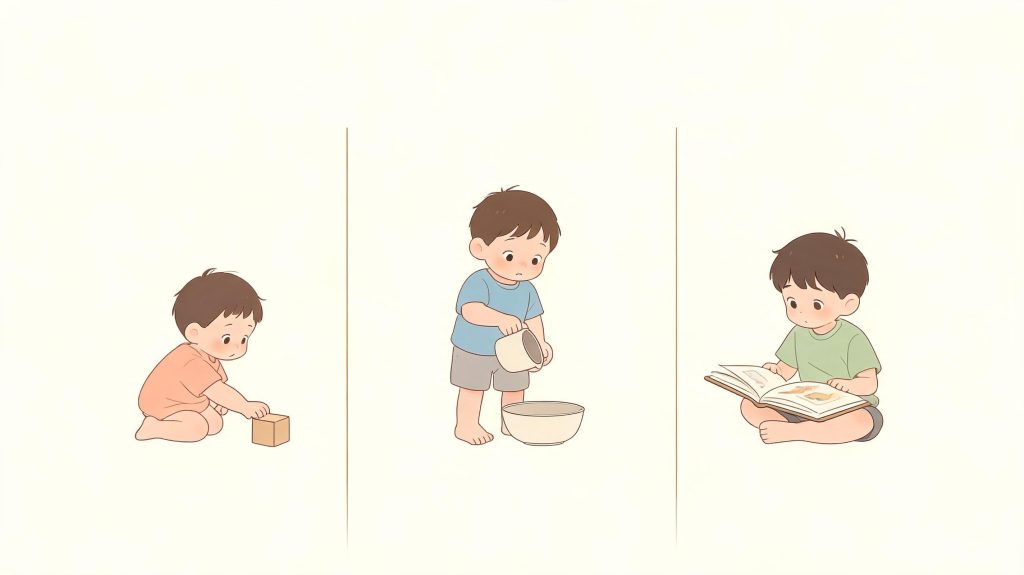
How to prepare for the pediatrician visit (what data to bring)
Bring specifics instead of impressions: how many words your toddler uses, whether they respond to their name from across the room, and two or three examples of instructions they do and don’t follow at home. A short video on your phone of a typical “ignoring” moment can also help your pediatrician see exactly what you’re describing.
How long does it take to see change once I stop repeating myself?
Most parents see a real shift in listening within 10 to 14 days of consistent one-verb, follow-through parenting, though the first few days often look worse before they look better. Toddlers test whether the new rules are real before they settle into them.
The 2-week “pattern reset” timeline: what to expect day 1–14
Days 1 to 3 usually feel harder, not easier, as your toddler pushes back against the new consistency. Days 4 to 7 are when the testing starts to fade, because the follow-through has stayed predictable. By days 8 to 14, most parents notice their toddler starting the instruction before it’s even fully finished, because the pattern has become familiar and safe.
Why it gets worse before it gets better (the “extinction burst”)
Behavioral researchers call this an extinction burst, when a behavior that used to work (in this case, ignoring you until you gave up or repeated yourself ten times) temporarily gets more intense right before it fades, because your toddler is testing whether the old strategy still pays off. This spike is a sign the new approach is working, not a sign to abandon it.
How to track progress so you don’t quit too soon
Keep it simple: a sticky note on the fridge with a tally mark for every instruction your toddler follows without a repeat. Most families see the tally climb steadily by day 10, which is often the exact point exhausted parents are tempted to give up.
What Real Parents Say
Scroll through any toddler parenting forum and this exact pain shows up on repeat: “angel for the teacher, demon for me.” Parents on Reddit and Netmums consistently describe the same humiliation, a toddler who melts down the second a parent walks in the door after being calm and cooperative all day elsewhere. If those door meltdowns feel familiar, our guide on how to stop toddler tantrums without losing your mind breaks down exactly what to do in the moment. The common thread across these threads isn’t bad parenting. It’s that toddlers save their hardest moments for the person who feels safest to fall apart with, and that pattern shows up in nearly every household, not just yours.
A close second in these threads: parents wondering specifically why their toddler listens to dad not mom, or vice versa, and feeling like it says something about who the “better” parent is. It doesn’t, it almost always traces back to which parent is unintentionally repeating instructions the most.
The other recurring theme in these communities is relief once someone names the pattern out loud. Parents describe feeling like they’d been “failing” until they realized their toddler’s behavior with them was actually a sign of trust, not disrespect, and that shift in understanding, more than any single technique, is what usually changes how the whole situation feels.
Quick Checklist: 7 Things That Make a Toddler Listen More (and 5 That Make It Worse)
What helps:
- Getting physically close before speaking
- Using one verb instead of a full sentence
- Waiting three seconds before repeating
- Following through every single time, calmly
- Giving a heads-up before transitions (“two more minutes”)
- Keeping your tone flat and warm, not sharp
- Offering a small choice within the instruction (“red shoes or blue shoes”)
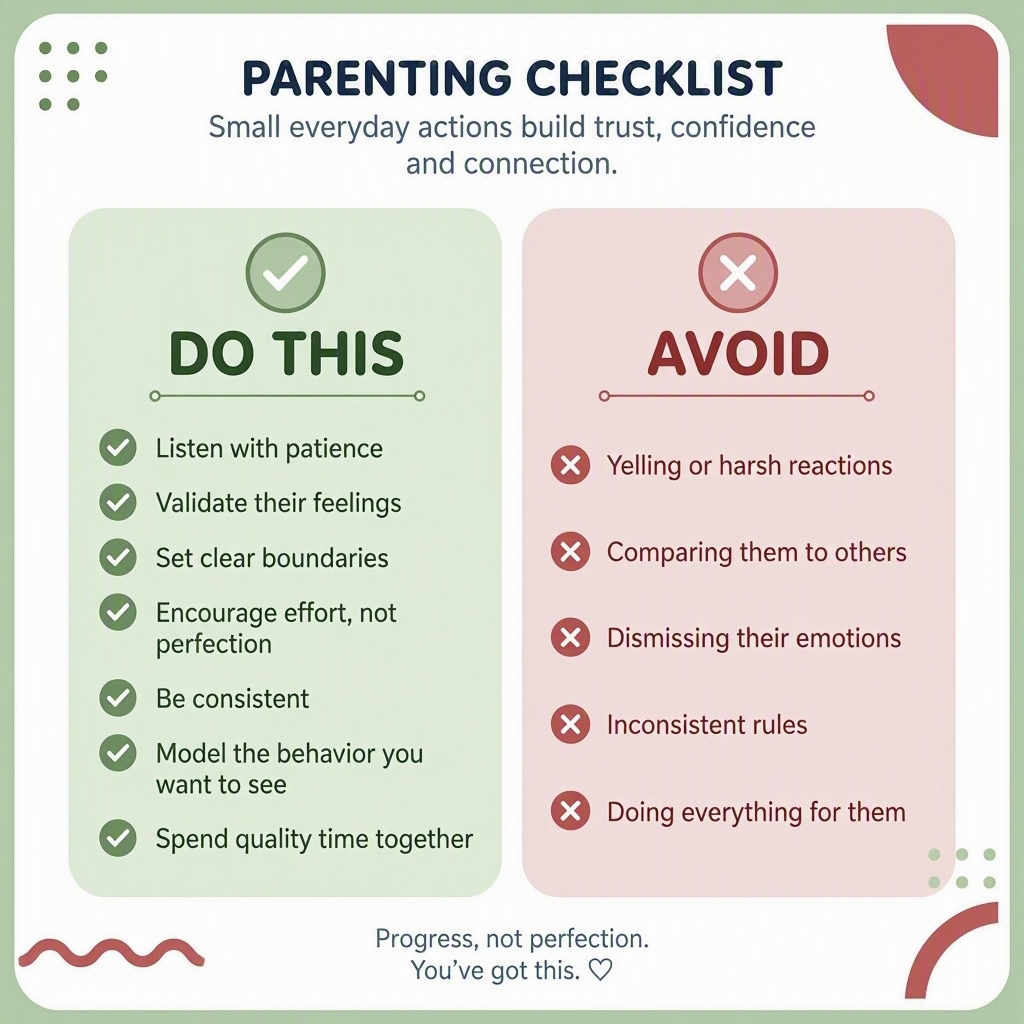
What backfires:
- Repeating the instruction from across the room
- Asking as a question (“can you put your shoes on?”)
- Adding a long explanation before the actual request
- Threatening a consequence you don’t follow through on
- Raising your volume instead of your proximity
Frequently Asked Questions
Why does my toddler listen to everyone but me?
Your toddler listens to other adults because those relationships carry less emotional weight, while you’re their safe base, the person secure enough to absorb their hardest behavior. It’s a sign of trust, not a parenting failure, and it responds well to short, close, followed-through instructions.
Why does my child behave for everyone but me?
Teachers, daycare providers, and grandparents typically use fewer words and more consistent follow-through, which toddlers respond to instantly. You can build the same result at home with one-verb instructions delivered up close, followed through calmly every time.
Is it normal for a toddler to ignore parents?
Yes. According to child development research on attachment, toddlers commonly reserve their most difficult behavior for their primary caregiver because that relationship feels safest. If you’ve been asking yourself why does my toddler ignore me but listens to grandma, the honest answer is that it’s developmentally typical and usually improves with consistent, close-proximity follow-through rather than louder discipline.
At what age should a toddler follow instructions?
According to the CDC, most toddlers follow one-step instructions without gestures by 18 months and two-step instructions by 24 months. By age 3, most children can manage two- to three-step directions. These are general ranges, and some variation is normal.
How do I get my toddler to listen without yelling?
Get close instead of calling out, use one clear verb instead of a full sentence, wait a few seconds for it to land, then follow through physically and calmly if needed. Consistency, not volume, is what teaches a toddler that an instruction is real.