20 Proven Toddler Outdoor Activities That Actually Work
Toddler Outdoor Activities: 20 Easy Ideas That Actually Keep Them Busy (Ages 1–4)
- Why Outdoor Play Matters for Toddlers
- Before You Start: Outdoor Safety for Toddlers
- Supervise Water Play Closely
- Check the Environment
- Prevent Choking and Poisoning Risks
- Protect Toddlers from Heat and Sun
- Use Safe Materials
- How Do You Keep a Toddler Busy Outside?
- 20 Easy Outdoor Activities for Toddlers (No Fancy Equipment Needed)
- 1. Water Painting
- 2. Bubble Chase
- 3. Nature Color Hunt
- 4. Texture Walk
- 5. Wash the Toys
- 6. Toddler Obstacle Path
- 7. Chalk Road or Shape Trail
- 8. Ball Roll and Target Toss
- 9. Nature Treasure Basket
- 10. Sticky Nature Art
- 11. Mud Kitchen
- 12. Teddy-Bear Picnic
- 13. Treasure Hunt
- 14. Water Spray Garden Helper
- 15. Homemade Music and Dance
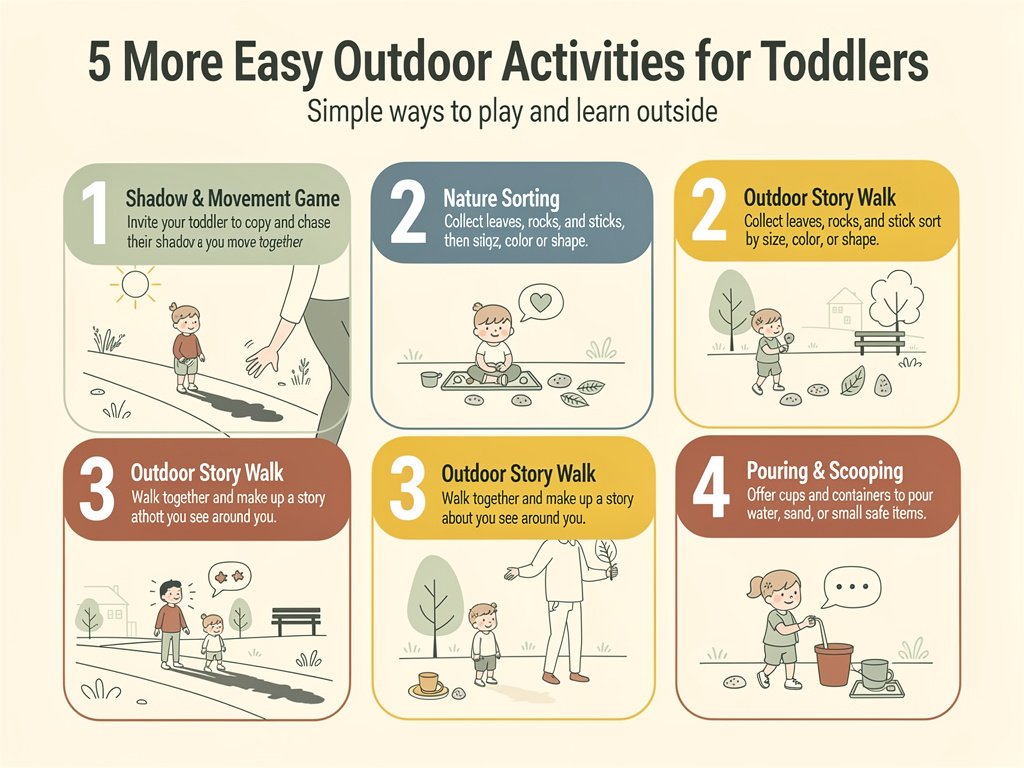
- 16. Shadow and Movement Game
- 17. Nature Sorting
- 18. Outdoor Story Walk
- 19. Pouring and Scooping Station
- 20. Mini Picnic and Nature Break
- Best Toddler Outdoor Activities by Age
- Outdoor Activities for Small Spaces
- Outdoor Toddler Activities by Weather
- Hot and Sunny Days
- Light Rain
- Windy Days
- Cooler Days
- How to Make These Activities Last Longer
- A Simple Weekly Outdoor Activity Plan
- What Parents on Reddit and Forums Actually Say
- Frequently Asked Questions
- The Bottom Line
Medical Disclaimer: This article is for general parenting information only and isn’t a substitute for medical advice. Always supervise young children during outdoor and water play, and talk to your pediatrician about any safety concerns specific to your child.
I used to think I needed a whole Pinterest board of props before my toddler would play outside for more than four minutes. A bucket of water and a paintbrush proved me wrong.
That’s really the whole premise of this guide. Toddler outdoor activities don’t need a shopping cart, they need two or three simple materials, a little bit of your attention, and permission to get a little messy. Toddlers have short attention spans, so instead of one big elaborate project, this article gives you 20 small, low-prep ideas you can start in under five minutes, whether you’ve got a garden, a courtyard, a terrace, or just a balcony with a railing you trust.
For every activity below, you’ll find the age range, how long it realistically holds attention, what mess to expect, and an easier or harder version depending on where your toddler is developmentally. There are safety notes throughout some non-negotiable, some just common sense, and a plan for hot days, rainy days, and the days you’re stuck in a small space with a very unimpressed one-year-old.
The best toddler outdoor activities are the simple ones : water painting, bubbles, chalk, a ball, or a short nature walk. This guide gives you 20 low-prep ideas for ages 1–4, sorted by age, mess level, and space, plus the safety basics (water, sun, choking) you actually need to know before you head out.
Why Outdoor Play Matters for Toddlers
I’m not going to pretend a bubble wand is going to unlock some hidden genius in your kid. What outdoor play does do is give toddlers a low-pressure setting to practice things they can’t practice sitting on a couch.
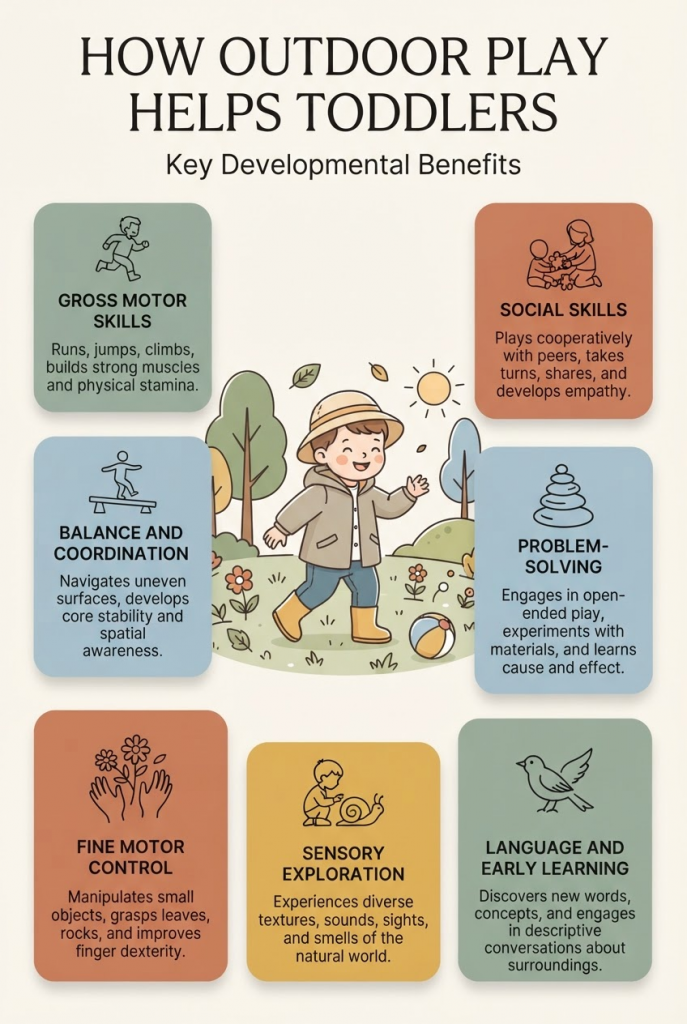
Time outside supports opportunities to practice:
- Gross motor skills : walking on uneven ground, climbing, squatting to pick things up
- Balance and coordination : stepping over cracks, carrying a full cup without spilling it
- Hand-eye coordination : throwing, catching, pouring
- Fine motor control : pinching chalk, holding a paintbrush, stacking pinecones
- Sensory exploration : grass, sand, water, bark, mud (see our full guide to sensory play ideas for toddlers for even more indoor and outdoor options)
- Language and early learning : naming colors, textures, weather, animals
- Creativity and pretend play : mud pies, pretend picnics, imaginary stories
- Problem-solving : figuring out how to get the ball out from under the bush
- Confidence and emotional regulation : the calm that comes from open space and movement
- Social cooperation : taking turns with a sibling, a hose, or a bubble wand
According to the CDC’s Physical Activity Guidelines for Americans, preschool-aged children should be active throughout the day and caregivers should aim for at least three hours of active play daily, mixing light, moderate, and more vigorous movement. Outdoor time is one of the easiest ways to get there without turning it into a workout.
Before You Start: Outdoor Safety for Toddlers
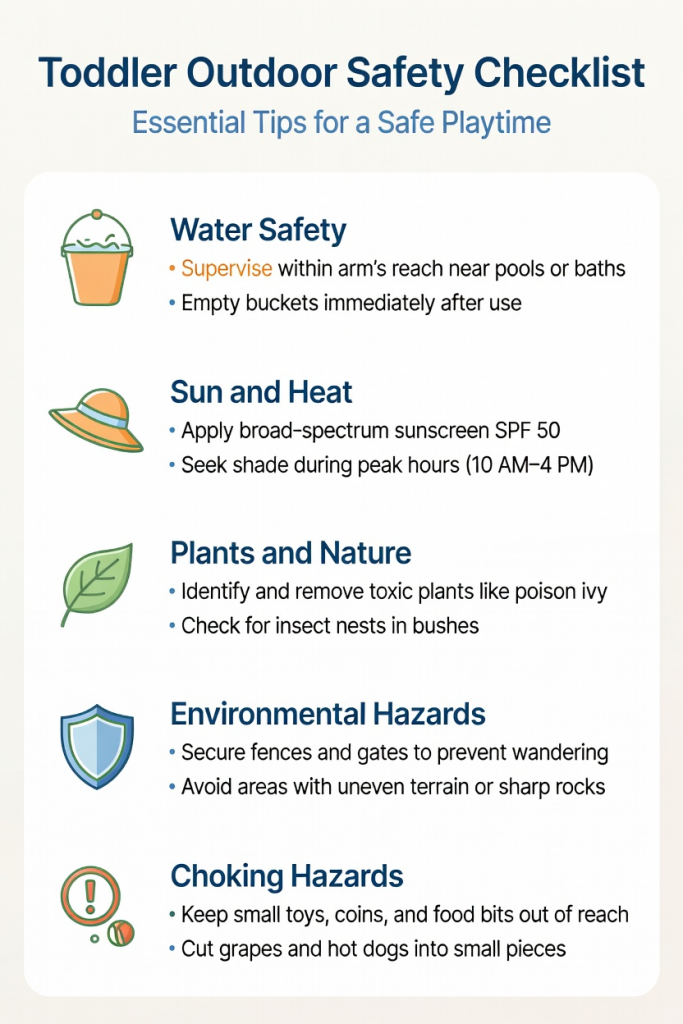
This section isn’t optional. A few minutes of prep here prevents the outdoor activities that follow from becoming a bad night.
Supervise Water Play Closely
Even a shallow bucket, tub, or puddle is a real drowning risk for a toddler, this is true no matter how confident they seem on their feet. The American Academy of Pediatrics recommends staying within arm’s length and giving constant “touch supervision” whenever a toddler is in or around water, and that includes buckets, water trays, hoses, and paddling pools, not just pools and bathtubs. Adults should empty water from buckets and containers immediately after use, toddlers can drown in just a couple of inches of standing water, and it happens fast and silently.
In our home, the rule is simple: if there’s water outside, there’s an adult within touching distance, phone down, eyes on the child. No exceptions, not even to grab a towel.
Check the Environment
Before you let your toddler loose, do a 60-second scan:
- Hot surfaces : metal slides, dark pavement, and tile in direct sun can burn bare feet or hands
- Traffic : driveways, shared parking areas, unfenced streets
- Balconies and railings : never leave a toddler unattended near one, even briefly
- Sharp objects, broken glass, or garden tools left out
- Animal waste, especially in shared courtyards or parks
- Pesticides, fertilizers, or recently treated grass
- Unfamiliar plants like some common garden and houseplants are toxic if chewed
Prevent Choking and Poisoning Risks
Toddlers explore with their mouths, and the outdoors is full of small, tempting objects: pebbles, shells, small flowers, berries, dropped pasta or rice from a sensory bin, and bugs. Keep activities that involve tiny natural objects supervised at arm’s length, and skip anything with berries or unknown seeds entirely for children under 3.
Protect Toddlers from Heat and Sun
For children 6 months and older, the AAP recommends a broad-spectrum sunscreen of at least SPF 30, reapplied roughly every two hours or after water play. Babies younger than 6 months should be kept out of direct sunlight entirely and protected with shade and clothing instead. Add a wide-brimmed hat, offer water breaks, and plan outdoor time before 10am or after 4pm when the sun is strongest. Touch the slide or the pavement with your own hand before your toddler sits or walks on it, if it’s too hot for you, it’s too hot for them.
Use Safe Materials
Stick to non-toxic, washable art supplies labeled safe for young children, and reach for household items you already trust wooden spoons, plastic cups, old pots over anything with small, detachable pieces.
How Do You Keep a Toddler Busy Outside?
Keeping a toddler busy outside doesn’t mean 60 straight minutes of independent play, it means short bursts of engagement, refreshed with small changes, while you stay nearby. A realistic outdoor session with a toddler looks more like ten short scenes than one long movie, and that’s completely normal.
A few principles make outdoor time go smoother:
- Offer only two or three materials at a time. A pile of ten toys overwhelms; two buckets and a cup doesn’t.
- Start with whatever they’re already into. If they’re obsessed with pouring water at bath time, that’s your cue.
- Choose open-ended materials. Sticks, water, and chalk can become a hundred different games; a single-purpose toy can only become one.
- Let them repeat. If your toddler wants to pour the same cup of water 40 times, that repetition is the learning.
- Add one variation at a time, not five. A new color of chalk, not a whole new activity.
- Rotate instead of dumping everything out at once. Put half the materials away for next week.
- Combine movement with sensory or pretend play like walking to collect leaves, then sorting them, covers two skill sets in one activity.
- Accept short attention spans as normal, not a sign something’s wrong.
- Follow their lead. If the “wrong” part of the activity is the fun part, let it be the activity.
20 Easy Outdoor Activities for Toddlers (No Fancy Equipment Needed)
Getting a toddler outside doesn’t need to mean a trip to the park or a basket full of toys. Most of the best outdoor play ideas for toddlers use things you already have at home: water, chalk, a few pots, some leaves. Below are 20 tried-and-tested activities, organized by age, prep time, and mess level, so you can pick one in ten seconds flat instead of scrolling through a Pinterest board.
Each entry includes the age range, how long it takes to set up, how long it usually holds a toddler’s attention, what skills it builds, and a safety note where one matters. There’s also an easier version for younger toddlers (12–18 months) and a trickier twist for 3–4 year olds, so the same list grows with your child.
1. Water Painting
Age: 1–4 | Prep: 1 min | Duration: 10–20 min
Materials: Bucket of clean water, large paintbrushes, rollers, or sponges
Space: Any paved surface | Mess: Low (just water) | Supervision: Close (water bucket)
Hand your toddler a wet brush and let them “paint” the pavement, a fence, or an outdoor wall. They’ll watch the surface darken, then slowly fade back to normal a small, genuinely fascinating cause-and-effect lesson at this age.
- Easier (12–18 mo): Use a wide, shallow tray instead of a deep bucket to cut drowning risk.
- Trickier (3–4 yrs): Mix in a drop of washable paint for a second color.
- Safety note: Never leave the water bucket unattended, even for a few seconds. Empty it the moment play ends.
- No-buy swap: An old kitchen sponge works just as well as a paintbrush.
2. Bubble Chase
Age: 1–4 | Prep: 0 min | Duration: 10–15 min
Materials: Bubble solution and wand
Space: Small yard, balcony, or courtyard | Mess: None | Supervision: Light
Zero setup, maximum payoff. Blow bubbles for your toddler to chase, pop, point at, and count.
- Easier (12–18 mo): Blow slow, low bubbles they can reach without running.
- Trickier (3–4 yrs): Let them blow the bubbles themselves and count how many they pop.
- Safety note: Some toddlers try to drink bubble solution. Use a child-safe, non-toxic formula, or switch to a bubble machine they can’t reach directly.
3. Nature Color Hunt
Age: 2–4 | Prep: 2 min | Duration: 10–20 min
Materials: None, or a simple color card
Space: Garden, park, or courtyard | Mess: None | Supervision: Moderate
Ask your toddler to find something red, then something green, then something yellow. Stick to large, obviously safe objects: leaves, flowers still on the plant, a red car parked nearby.
- Easier (12–18 mo): Point things out together instead of asking them to search alone.
- Trickier (3–4 yrs): Add a second color per round, or bring shapes into the mix.
- Safety note: Avoid unknown berries, mushrooms, and plants. “Look, don’t pick” is the default rule.
4. Texture Walk
Age: 1–4 | Prep: 0 min | Duration: 10–15 min
Materials: None | Space: Garden or park path | Mess: Low | Supervision: Moderate
Walk slowly across grass, smooth pavement, sand, and fallen leaves, naming each texture as you go. This one is fully child-led, some toddlers love bare feet, others hate it, and both reactions are normal.
- Easier (12–18 mo): Let them touch textures with their hands while you hold them, instead of walking on all of them.
- Trickier (3–4 yrs): Ask them to guess the texture with their eyes closed (hands only, for safety).
- Safety note: Check the ground for sharp objects or glass before bare feet touch it.
5. Wash the Toys
Age: 1–4 | Prep: 3 min | Duration: 15–25 min
Materials: Shallow basin, sponges, cloths, washable plastic toys
Space: Balcony, patio, or courtyard | Mess: Medium | Supervision: Close (water)
Set out a low basin of water with a few dirty ride-on toys or blocks for a “car wash”. It’s satisfying, repeatable, and doubles as real chore practice.
- Easier (12–18 mo): One large sponge, one toy at a time.
- Trickier (3–4 yrs): Add a second basin for “rinse” vs “wash,” then dry toys with a towel afterward.
- Safety note: Empty the basin the second play ends. Never leave a filled basin outside unsupervised.
6. Toddler Obstacle Path
Age: 2–4 | Prep: 5 min | Duration: 15–20 min
Materials: Chalk lines, cones, large stable boxes, or stepping targets
Space: Yard, courtyard, or driveway | Mess: None | Supervision: Moderate
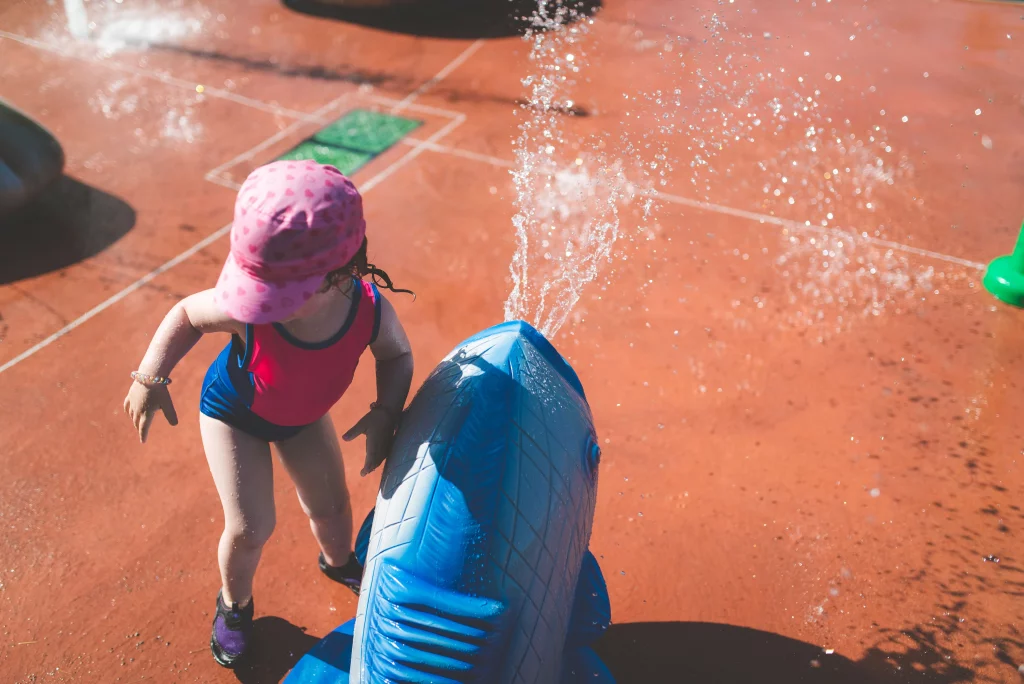
A simple path to walk, step over, crawl through, or balance along. Keep it low to the ground, this is about coordination, not climbing height.
- Easier (12–18 mo): Swap cones for painter’s-tape lines to step over, with an adult hand for balance.
- Trickier (3–4 yrs): Add a crawling-tunnel section or a “hop like a bunny” segment.
- Safety note: Only use cushions outdoors if they’re dry and stable. Wet or soft cushions can trip a toddler.
7. Chalk Road or Shape Trail
Age: 1–4 | Prep: 2 min | Duration: 15–25 min
Materials: Washable sidewalk chalk | Space: Any paved area | Mess: Low (washes off) | Supervision: Light
Draw a winding road, circles, zigzags, or footprints, then let your toddler walk it, drive a toy car along it, or jump between shapes. A five-minute setup that easily stretches into twenty.
- Easier (12–18 mo): Draw large, simple shapes for scribbling on, not for following.
- Trickier (3–4 yrs): Turn it into color-matching, “drive to the blue circle”
- Safety note: Keep chalk pieces large enough that they aren’t a choking risk for mouthy toddlers.
8. Ball Roll and Target Toss
Age: 1–4 | Prep: 0 min | Duration: 10–20 min
Materials: One large soft ball, a basket or box | Space: Small yard or open courtyard | Supervision: Light
Start with rolling a big soft ball back and forth. Older toddlers can graduate to tossing beanbags into a laundry basket a few feet away.
- Easier (12–18 mo): Sit on the ground and roll, rather than throwing.
- Trickier (3–4 yrs): Move the target farther away or add a point system.
- Safety note: Choose a ball too large to be a choking hazard, especially for the youngest toddlers.
9. Nature Treasure Basket
Age: 1–4 | Prep: 5 min | Duration: 10–20 min
Materials: Basket, large leaves, large sticks, pinecones | Space: Garden or park | Mess: Low | Supervision: Close (mouthing risk)
Collect a small basket of interesting natural objects together and let your toddler sort, stack, and examine them. Quiet, focus-building play.
- Easier (12–18 mo): Choose only the largest, smoothest items, and watch closely for mouthing.
- Trickier (3–4 yrs): Add a sorting basket for “smooth” vs “rough” or “big” vs “small”
- Safety note: Inspect every item for sharp edges, insects, or mold, and skip anything small enough to fit through a toilet-paper tube.
10. Sticky Nature Art
Age: 2–4 | Prep: 3 min | Duration: 15–20 min
Materials: Cardboard or wide masking tape (sticky side out), leaves, grass | Space: Garden, patio, or balcony | Supervision: Close
Tape a strip of cardboard sticky-side-up and let your toddler press on leaves and grass to build nature art they can hang up afterward. Almost zero cleanup.
- Easier (12–18 mo): Pre-select a few large, safe leaves so there’s less independent foraging.
- Trickier (3–4 yrs): Let them collect their own materials from a boundary you set first.
- Safety note: Avoid anything with berries, unfamiliar plants, or visible insects, and watch for known allergies.
11. Mud Kitchen
Age: 1–4 | Prep: 5 min | Duration: 20–30 min
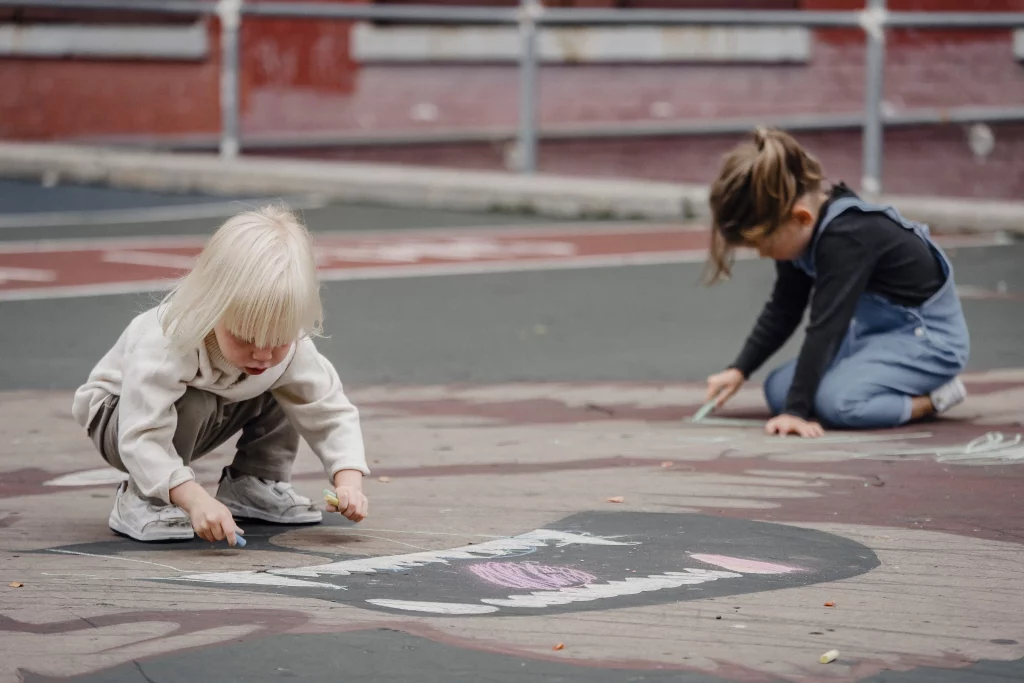
Materials: Old pots, spoons, cups, soil, water | Space: Garden or yard corner | Mess: High | Supervision: Close
Set up a corner with old kitchen tools, dirt, and water for pretend cooking. Consistently the highest-engagement idea on this list, pure open-ended play.
- Easier (12–18 mo): Use damp sand instead of soil for an easier texture to manage.
- Trickier (3–4 yrs): Add picture “recipes” with steps to follow, like “add water, stir, serve”
- Safety note: Use clean, untreated soil away from animal areas, and keep small stones and berries out of the mix.
12. Teddy-Bear Picnic
Age: 1–4 | Prep: 5 min | Duration: 15–25 min
Materials: Blanket, plastic cups and plates, stuffed animals | Space: Small patch of grass or patio | Supervision: Moderate
Lay out a blanket and let your toddler “serve” pretend food to their stuffed animals. Add a real snack if it fits your routine, and supervise eating outside just as you would indoors.
- Easier (12–18 mo): Keep it to two or three items so it’s not overwhelming.
- Trickier (3–4 yrs): Let them assign roles, who’s hungry, who’s full, who wants more.
- Safety note: If real food is involved, keep your toddler seated while eating to reduce choking risk.
13. Treasure Hunt
Age: 2–4 | Prep: 5 min | Duration: 10–20 min
Materials: One large toy, simple picture clues | Space: Small yard or courtyard | Mess: None | Supervision: Light
Hide a large, favorite toy somewhere obvious and help your toddler find it with simple language: “Where’s the ball? Is it under the chair?”
- Easier (12–18 mo): Keep the item partly visible rather than fully hidden.
- Trickier (3–4 yrs): Use two or three picture clues that lead from spot to spot.
- Safety note: Skip small hidden objects entirely. This game should only ever use large items.
14. Water Spray Garden Helper
Age: 1–4 | Prep: 1 min | Duration: 10–15 min
Materials: Small watering can or child-safe spray bottle | Space: Garden, balcony planters | Mess: Low | Supervision: Close (water)
Let your toddler help “water” real or pretend plants. For apartment living, a few balcony planters work just as well as a full garden.
- Easier (12–18 mo): Fill the watering can only partway to keep it manageable.
- Trickier (3–4 yrs): Assign specific plants as their daily responsibility.
- Safety note: Stay within arm’s reach any time water is involved, even a small spray bottle.
15. Homemade Music and Dance
Age: 1–4 | Prep: 2 min | Duration: 10–20 min
Materials: Wooden spoons, plastic containers, scarves, ribbons | Space: Any small outdoor space | Supervision: Light
Turn a plastic container into a drum and let your toddler bang, shake, and dance to their own rhythm.
- Easier (12–18 mo): One spoon, one container, keep it minimal.
- Trickier (3–4 yrs): Add a “freeze dance” element, stopping and starting the beat.
- Safety note: Avoid small loose parts (bells, beads) that could detach, and keep sound close but not right against little ears.
16. Shadow and Movement Game
Age: 2–4 | Prep: 0 min | Duration: 10–15 min
Materials: None | Space: Any sunny outdoor spot | Mess: None | Supervision: Light
Make animal shapes, copy each other’s movements, or walk toward and away from a shadow to watch it grow and shrink.
- Easier (12–18 mo): Simply point out and name shadows as you walk.
- Trickier (3–4 yrs): Play shadow tag, where they try to step on your shadow.
- Safety note: Best for early morning or late afternoon, lower-UV hours anyway.
17. Nature Sorting
Age: 2–4 | Prep: 5 min | Duration: 15–20 min
Materials: A small collection of large, safe natural objects | Space: Garden, patio, courtyard | Mess: Low | Supervision: Close
Have your child sort leaves, sticks, and pinecones by color, size, or shape into simple piles or containers, an easy early-math activity in disguise.
- Easier (12–18 mo): Sort into just two piles, “big” and “small”
- Trickier (3–4 yrs): Sort by three categories at once, or introduce counting.
- Safety note: Everything used must be too large to swallow. Mouthy toddlers need continuous supervision here.
18. Outdoor Story Walk
Age: 1–4 | Prep: 0 min | Duration: 15–25 min Materials: None | Space: Neighborhood, garden, or park path | Supervision: Moderate
Take a short walk and build a simple story around what you see: a bird flying home, a cloud shaped like a dog, a car going to work.
- Easier (12–18 mo): Keep it to naming and pointing rather than a full narrative.
- Trickier (3–4 yrs): Ask what happens next in the story to build language skills.
- Safety note: Hold hands near driveways, parking areas, and unfenced streets.
19. Pouring and Scooping Station
Age: 1–4 | Prep: 3 min | Duration: 15–25 min
Materials: Large cups, scoops, funnels, shallow water tray or dry sand | Space: Balcony, patio, or garden | Mess: Medium-high | Supervision: Close (water)
A simple pouring station with cups and scoops can hold a toddler’s attention for surprisingly long stretches, one of the best low-cost ideas on this list.
- Easier (12–18 mo): Use dry sand instead of water to remove drowning risk entirely.
- Trickier (3–4 yrs): Add a second container and ask them to fill it to a marked line.
- Safety note: Keep water shallow (under 2 inches) and never step away, even briefly.
20. Mini Picnic and Nature Break
Age: 1–4 | Prep: 5 min | Duration: 15–20 min
Materials: Blanket, simple snack (optional) | Space: Any small patch of shade | Mess: Low | Supervision: Moderate
Sometimes the best outdoor activity is no activity at all: a blanket, a snack, and a few minutes of pointing at birds, clouds, and passing dogs.
- Easier (12–18 mo): Keep it short and expect wandering, that’s normal.
- Trickier (3–4 yrs): Add a listening game, how many different sounds can they name?
- Safety note: Choose shaded spots during peak sun hours, and keep snacks seated to reduce choking risk.
Best Toddler Outdoor Activities by Age
| Age | Good starting activities | What to expect |
|---|---|---|
| 1–2 years | Bubbles, water painting, ball rolling, texture exploration, washing large toys | Short bursts, lots of repetition, mouthing objects, close supervision |
| 2–3 years | Chalk trails, simple obstacle paths, nature sorting, treasure hunts, pretend picnics | More imitation, simple choices, early pretend play |
| 3–4 years | Scavenger hunts, nature art, obstacle challenges, movement games, storytelling | Longer participation, more language, cooperative and problem-solving play |
Outdoor Activities for Small Spaces
You don’t need a backyard for any toddler outdoor activity on this list, though if you do have one, our dedicated backyard play area guide has ideas built specifically for that space. Balconies, terraces, courtyards, small patios, and shared apartment entrances all work — the rule that changes is supervision, not the activity list.
- Balconies: Never leave a toddler unattended near a railing, even for a few seconds. Keep furniture away from railings so it can’t be used as a step-up.
- Terraces and patios: Water painting, bubbles, chalk shapes, toy washing, and shadow games all fit easily in a small footprint.
- Courtyards and shared outdoor spaces: A small nature basket or a portable pouring station travels well and packs up fast.
- A parent sitting nearby, actively watching : not scrolling a phone, is the one constant across every small-space setup.
Outdoor Toddler Activities by Weather
Hot and Sunny Days
Move outdoor time to early morning or late afternoon, stick to shaded spots, and offer water breaks every 20–30 minutes. The AAP notes that up to 80% of UV rays still pass through cloud cover, so sun protection matters even on overcast days. Check slides and pavement for heat with your own hand before your toddler touches them.
Light Rain
Puddle-watching, collecting rainwater in a large bucket, listening games, and washable outdoor art all work in light rain, as long as there’s no thunder, flooding, or slippery hazard nearby.
Windy Days
Ribbons, scarves, bubbles, and cloud-watching are naturally suited to breezy afternoons. Skip loose, lightweight toys that could blow into traffic or off a balcony.
Cooler Days
Movement games, short brisk walks, and ball play keep toddlers warm without overdressing them. If lips or fingertips turn blue or your toddler seems miserable rather than just chilly, it’s time to head inside.
How to Make These Activities Last Longer
When a five-minute activity keeps ending in five minutes, try one of these:
- Add a pretend-play story on top of the activity
- Change the movement pattern (walking becomes hopping)
- Introduce color-naming or simple counting
- Let your toddler choose what happens next
- Bring in a sibling or a parent turn
- Use a timer only as a gentle transition cue, never as pressure
- Stop while it’s still fun, and pick it back up another day
That last one matters more than people expect, ending on a high note is often why a toddler asks for the same activity again tomorrow.
A Simple Weekly Outdoor Activity Plan
- Monday: Movement (obstacle path or ball games)
- Tuesday: Nature exploration (color hunt or treasure basket)
- Wednesday: Water or sensory play (pouring station or water painting)
- Thursday: Outdoor art (chalk or sticky nature art)
- Friday: Pretend play (mud kitchen or picnic)
- Saturday: Park, walk, or family outing
- Sunday: Child-led free play, no agenda, follow their interest
Swap days around freely for heat, rain, or a limited outdoor space, with toddler outdoor activities, the order matters far less than the variety.
What Parents on Reddit and Forums Actually Say
Scanning parenting forums for outdoor play, a few patterns come up again and again. Parents consistently mention that the simplest ideas win water and a paintbrush, chalk, or bubbles outlast almost every purchased toy in terms of actual play time. Several also flag that a mud kitchen made from old kitchen tools gets more repeat play than anything from a store. And more than a few parents admit their toddler’s favorite “activity” is just following them around while they do yard work, a reminder that presence, not a perfect plan, is usually what a toddler actually wants.
Frequently Asked Questions
What are easy outdoor activities for a 1-year-old? Water painting, bubbles, rolling a soft ball, and texture walks work well for 1-year-olds. Keep sessions short, stay within arm’s reach for any water play, and expect a lot of mouthing and repetition.
How can I entertain a 2-year-old outside? Chalk trails, simple obstacle paths, nature sorting, and pretend picnics hold a 2-year-old’s attention well. Offer only two or three materials at a time and let them repeat activities as often as they want.
What outdoor activities are suitable for a 3-year-old? Scavenger hunts, nature art, obstacle challenges, and storytelling walks suit most 3-year-olds. They can follow simple multi-step instructions and enjoy more cooperative, pretend-heavy play.
What can toddlers do outside without a garden or playground? A balcony, terrace, or small courtyard is plenty for water painting, bubbles, chalk, toy washing, and a nature treasure basket. The activity list matters more than the size of the space.
How long should toddlers play outside? There’s no strict minimum, but the CDC recommends preschool-aged children stay active throughout the day, aiming for roughly three hours of varied movement. That total can be split into many short outdoor and indoor bursts rather than one long session.
The Bottom Line
None of this requires a shopping trip. The best toddler outdoor activities use a bucket of water, a stick of chalk, a bottle of bubbles, a soft ball, or a short walk around the block and honestly, most of it is already sitting in your kitchen drawer.
Stay close during water play, protect against sun and heat, and let your toddler lead more often than you’d expect. Pick one activity from this list and try it today, the “keeping them busy” part tends to take care of itself once you stop overthinking the setup