Pink Noise & Baby Sleep: 2026 Study Reveals the Truth
Does Pink Noise Reduce REM Sleep in Babies? What the 2026 Study Actually Found
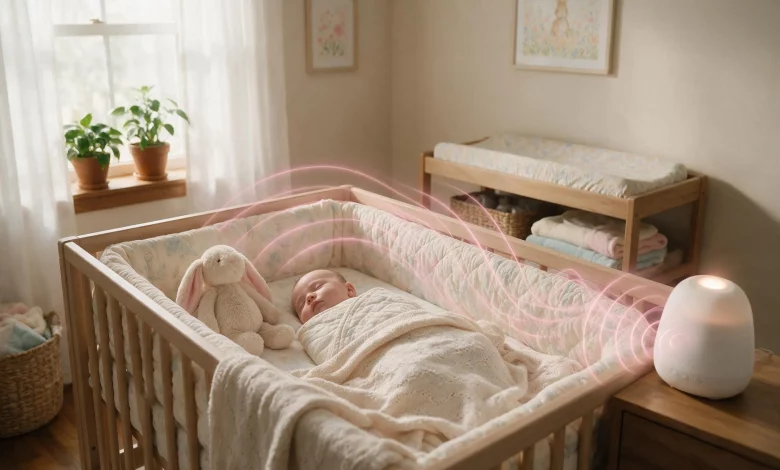
- Quick Answer: Does Pink Noise Reduce REM Sleep in Babies?
- What Did the 2026 Pink Noise Study Actually Find?
- What Penn Researchers Actually Said
- Researchers DID Say:
- Researchers DID NOT Say:
- Baby Brain Development and Sleep Sounds: Why This Debate Started
- Why Would This Matter for Babies, Even Though the Study Was on Adults?
- What Is REM Sleep and Why Does It Matter for Babies?
- Pink Noise vs. White Noise for Babies: What’s the Difference?
- Pink Noise vs White Noise Baby Sound Machines: Quick Comparison
- The 1-Hour Transition Method: A Practical Middle Ground
- What Are Some Safe Alternatives If You’d Rather Skip Pink Noise Entirely?
- Best Sound Frequency for Newborn Brain Development
- Should I Stop Using Pink Noise Tonight?
- Does Pink Noise Reduce REM Sleep in Babies Enough to Worry About?
- Pink Noise vs White Noise Baby: Which Is Better?
- What Future Research Needs to Answer
- Did You Know?
- Which Babies Should Parents Be More Cautious With?
- What Does This Mean for Parents Right Now?
- Frequently Asked Questions
- Has this actually been tested on infants, not just adults?
- Is pink noise vs. white noise a meaningful safety difference for babies?
- Should I stop using a sound machine for my baby tonight?
- How much REM sleep do babies actually need?
- Conclusion: Does Pink Noise Reduce REM Sleep in Babies?
Medical Disclaimer: This article is for informational purposes only and is not a substitute for professional medical advice. Always consult your pediatrician before changing your baby’s sleep environment or routine, especially if your child has a diagnosed sleep or health condition.
If you’ve been Googling does pink noise reduce REM sleep in babies at 2 AM with the sound machine humming in the next room, I want you to know something first: you are not overreacting. A new 2026 study out of the University of Pennsylvania gave a lot of us sound-machine parents a small heart attack, and I dug into the actual research (not just the headlines) so you don’t have to. I’ll admit it: I almost unplugged our sound machine at 1:30 in the morning after reading the headline before I’d read a single word of the actual study.
A 2026 University of Pennsylvania sleep lab study found that pink noise reduced REM sleep in adults by about 19 minutes a night. The researchers didn’t test babies directly, but they warned that infants who spend far more time in REM sleep than adults, could be more vulnerable. It doesn’t mean throw out your sound machine tonight. It means use it smarter, which I’ll walk you through below.
Here’s the entire study in 30 seconds :
| Question | Answer |
|---|---|
| Were babies studied? | No |
| Who was studied? | 25 healthy adults |
| What changed? | REM sleep decreased by ~19 minutes |
| Should parents panic? | No |
| What should parents do? | Lower volume, use timers, follow future research |
Quick Answer: Does Pink Noise Reduce REM Sleep in Babies?
The direct answer is: we don’t fully know yet, but the early signal is concerning enough to take seriously. The 2026 study that’s driving this conversation was conducted on 25 healthy adults, not infants, and it found that continuous pink noise reduced their REM sleep. The lead researcher specifically flagged babies and toddlers as a group that deserves urgent follow-up research, since they naturally spend a much larger share of the night in REM than grown-ups do, the kind of caution any tired parent scrolling for answers deserves to hear stated plainly.
What Did the 2026 Pink Noise Study Actually Find?
The 2026 study, led by Dr. Mathias Basner at the University of Pennsylvania’s Perelman School of Medicine and published in the journal Sleep, is the one every parenting group is suddenly talking about. Researchers observed 25 healthy adults in a sleep lab over seven consecutive nights, testing conditions like silence, constant pink noise, aircraft noise, and aircraft noise plus earplugs. When participants slept with pink noise alone, their REM sleep dropped by an average of about 19 minutes per night compared to quieter conditions.
According to Penn Medicine, REM sleep matters because it’s tied to memory consolidation, emotional regulation, and brain development. Earplugs, by contrast, protected sleep from environmental noise without cutting into REM at all. Basner and his team were careful to say this was a small, short-term lab study in adults — but they still recommended caution around broadband noise use in newborns and toddlers, pending more research in that specific age group.
In our home, this was the first study that made me actually read the methodology instead of just the scary headline, and I think that’s the right move for every exhausted parent seeing this trend online.
What Penn Researchers Actually Said
If you’re looking for what new studies say about baby sleep sounds 2026, here’s the clearest breakdown of what the Penn team actually did and didn’t conclude, because a lot of viral posts blur this line.
Researchers DID Say:
- REM sleep decreased in the adult participants who slept with pink noise, by an average of about 19 minutes a night.
- More research directly involving infants is urgently needed before drawing conclusions about babies specifically.
- Broadband noise pink, white, and other “colors” deserves additional investigation, especially in vulnerable populations like newborns and toddlers.
Researchers DID NOT Say:
- That pink noise harms babies. This specific claim was never made in the published study.
- That parents should stop using sound machines.
- That white noise is a safer alternative, it wasn’t directly tested against pink noise for REM effects in this study.
- That infant brain damage occurs from sound machine use of any kind.
That distinction matters. It’s the difference between “a small adult study found something worth studying further in babies” and “your baby’s sound machine is dangerous” only the first is actually true.
Baby Brain Development and Sleep Sounds: Why This Debate Started
Every conversation about baby brain development and sleep sounds eventually comes back to REM sleep, because that’s the stage most closely tied to how a young brain organizes memory and emotion overnight.
Why Would This Matter for Babies, Even Though the Study Was on Adults?
This matters for babies mainly because of one basic fact of infant sleep architecture: newborns spend roughly 50% of their sleep in REM, compared to about 20-25% in adults, according to general pediatric sleep guidelines. If pink noise meaningfully suppresses REM sleep in a population that already gets less of it proportionally, the theoretical stakes are simply higher for a developing brain that relies on that stage more heavily.
To be clear: no study has directly measured REM disruption from sound machines in real infants yet. This is a plausible-sounds-worrying extrapolation from adult data, not a confirmed pediatric finding. That distinction matters, and any article telling you otherwise is overstating the science.
What Is REM Sleep and Why Does It Matter for Babies?
REM stands for Rapid Eye Movement, the sleep stage where the eyes flick beneath closed lids and most dreaming happens. During REM, the brain consolidates memories from the day, sorting short-term experiences into longer-term storage. REM sleep is also tied to emotional regulation, both children and adults appear to process emotional experiences during this stage, which is part of why a rough night’s sleep makes everything feel harder the next day.
For a developing brain specifically, REM sleep is where a lot of active building happens synapses forming, neural pathways strengthening, all part of the broader picture of baby brain development sleep sounds research keeps circling back to. Newborns spend close to 50% of their total sleep time in REM. That’s dramatically more than adults, who spend somewhere around 20-25%. It’s not a coincidence a newborn’s brain is doing an enormous amount of foundational wiring in the first weeks and months of life, and REM sleep appears to be a meaningful part of how that happens.
REM sleep changes dramatically during childhood.
| Age | Approximate REM Sleep |
|---|---|
| Newborn | ~50% |
| 1 Year | 30–40% |
| Preschool | 25–30% |
| Adult | 20–25% |
Pink Noise vs. White Noise for Babies: What’s the Difference?
Pink Noise vs White Noise Baby Sound Machines: Quick Comparison
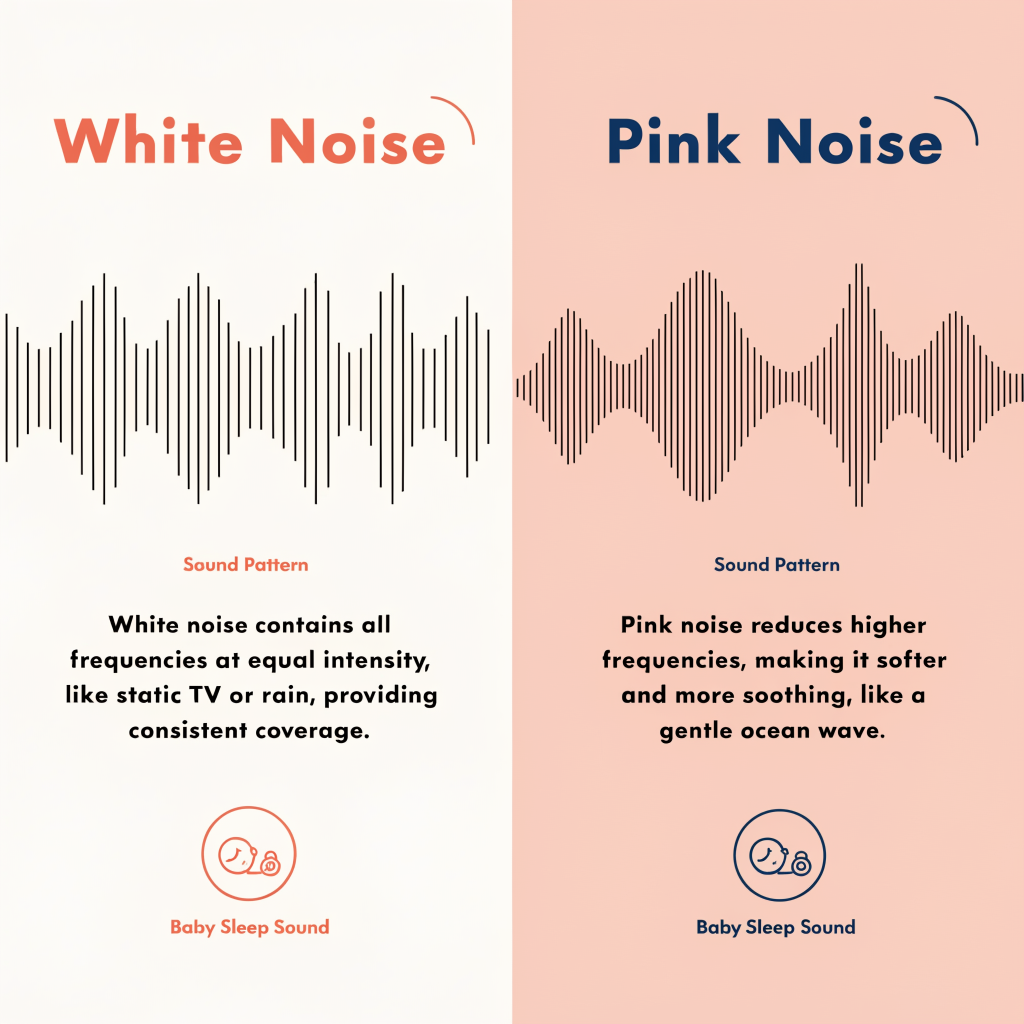
Parents often use “white noise” and “pink noise” interchangeably, but they’re not the same sound, and that difference matters for this conversation.
| Feature | White Noise | Pink Noise |
|---|---|---|
| Frequency balance | Equal energy across all frequencies | Lower frequencies emphasized, softer highs |
| How it sounds | Static, like a fan or TV between channels | Deeper, like steady rainfall or wind |
| Studied in 2026 Penn research? | Not directly tested in this specific study | Yes, this is the noise type tested |
| Popularity in baby sound machines | Very common | Increasingly common, marketed as “gentler” |
| Current caution level | General broadband-noise caution applies | Specific caution raised by this study |
Is pink noise safe for infants right now? No sound machine has been proven unsafe for babies in a controlled infant study, and pink noise isn’t banned or discouraged by the AAP at this time. What we have is a legitimate open question from adult data, plus a researcher publicly urging more caution and more research specifically in newborns and toddlers.
The 1-Hour Transition Method: A Practical Middle Ground
I didn’t want to just tell you “throw away the sound machine” that’s not realistic at 3 AM, and honestly, sound machines solve real problems like blocking a barking dog or a sibling’s door slam. So here’s the approach I use, built around the idea of masking noise during sleep onset without running broadband sound all night long.
How to set up the 1-Hour Transition Method:
- Turn on your sound machine as usual right before you start the bedtime routine, so it becomes part of the sleep cue your baby already associates with rest.
- Set the auto-off timer to exactly 60 minutes. Most modern sound machines have a built-in timer function in the settings menu; if yours doesn’t, a smart plug with a timer works too.
- Keep the volume at a safe, low level, the AAP recommends sound machines stay below 50 decibels and be placed at least 7 feet from the crib, regardless of noise color.
- Let the timer shut off automatically during the first sleep cycle. This is typically when your baby is falling into their deepest initial sleep, and household noise (dishes, older siblings, TV) is most likely to disrupt them.
- Allow the rest of the night to stay naturally quiet, so your baby’s later sleep cycles, which include more REM sleep as the night goes on, aren’t running against continuous broadband noise.
- If your baby wakes at the 60-minute mark, don’t panic and switch it back on reflexively. Give it a few minutes; many babies briefly stir between cycles and resettle on their own.
The bottom-line pro tip: this method isn’t a clinically proven protocol, it’s a common-sense compromise that uses the sound machine for its actual job (masking sudden noise during sleep onset) without running it as ambient background noise for 10-12 hours straight.
What Are Some Safe Alternatives If You’d Rather Skip Pink Noise Entirely?
If this whole conversation has you wanting to sidestep pink noise altogether, you do have real options, and none of them require giving up on managing nighttime noise.
- White noise on a timer works the same way as the 1-Hour Transition Method described above, just with a different noise color.
- A simple box fan placed safely away from the crib gives steady, low-level sound without the marketing claims attached to specific “colors” of noise.
- Blackout curtains plus a quiet room address light and startle triggers without adding any continuous sound at all.
- A brief, consistent bedtime routine bath, book, song, lights out, reduces reliance on sound as the sole sleep cue, so your baby isn’t dependent on any single noise machine to fall asleep.
None of these are more scientifically proven than pink noise for babies specifically, they’re simply lower-risk defaults while infant-specific research catches up.
Best Sound Frequency for Newborn Brain Development
If you’re choosing a sound machine from scratch, the current, honest answer is that no single frequency has been specifically validated as “best” for newborn brain development. What pediatric sleep specialists do agree on: keep volume low (under 50 decibels), keep the source at a safe distance, avoid running continuous sound all night if you can help it, and prioritize consistency over chasing the “perfect” noise color. If your baby is currently sleeping well on white noise, this study alone isn’t reason enough to overhaul a working system, it’s reason to add a timer and keep the volume conservative.
For more on setting up your baby’s overall sleep environment, our Ultimate Baby Sleep Guide covers the full framework this fits into, and our Baby Wake Windows by Age guide can help if timer-based sound changes seem to be affecting nap or night wake times. If you’re deciding between a white noise machine and a music-box style lullaby player, our dedicated White Noise Machines vs. Lullabies comparison breaks down the safety and sleep-onset differences in more depth.
Should I Stop Using Pink Noise Tonight?
Short answer: probably not, and here’s why. One adult study is not the same thing as infant evidence, and it would be premature to overhaul your entire nursery sound setup based on 25 grown adults sleeping in a research lab.
Does Pink Noise Reduce REM Sleep in Babies Enough to Worry About?
Based on what’s published so far, there isn’t direct infant data confirming this either way. The honest, non-alarmist reading of the evidence is a caution flag, not a fire alarm.
Is pink noise safe for infants tonight, specifically? For most healthy, full-term babies without a diagnosed sleep or neurological condition, yes with the same sensible precautions that apply to any sound machine: keep the volume low, keep the unit at a safe distance, and consider a timer rather than running it for ten-plus hours straight.
Practical actions you can take tonight:
- Lower the volume, aim for under 50 decibels.
- Keep the sound machine at least 7 feet from the crib.
- Use a timer instead of running sound continuously all night.
- Keep an eye on future research rather than reacting to every new headline.
Use today’s evidence, not tomorrow’s fears.
Pink Noise vs White Noise Baby: Which Is Better?
When it comes to pink noise vs white noise baby sound machines, most sleep researchers agree there isn’t a clear “winner” yet, just different levels of caution attached to each.
| Feature | White Noise | Pink Noise |
|---|---|---|
| Sound | Static | Rain-like |
| Popularity | High | Medium |
| REM concerns | None identified | Emerging |
| Infant research | Limited | Very limited |
| Current recommendation | Acceptable at safe volume | Acceptable with caution |
Both noise types fall under the same general safe-volume guidance from the AAP, and neither has direct infant REM data confirming harm one way or the other. This table isn’t a reason to swap products overnight, it’s context for an informed decision, not an anxious one.
What Future Research Needs to Answer
The current pink noise study raises more questions than it answers, that’s normal science. Here’s what researchers still need to figure out:
- Does pink noise affect newborn REM sleep specifically, not just adult REM sleep?
- Does exposure duration change the effect, an hour versus all night?
- Does volume level change the risk, and is there a safe threshold?
- Are some babies more vulnerable, such as premature infants?
- Is white noise meaningfully different from pink noise for infant sleep architecture?
Science is asking better questions, not delivering final answers.
Did You Know?
- Babies spend nearly half their sleep in REM.
- Adults spend roughly 20-25%.
- REM sleep is heavily involved in brain development.
- This is exactly the kind of question at the center of baby brain development sleep sounds research today, and it’s why researchers are paying closer attention to broadband noise exposure in infants.
Which Babies Should Parents Be More Cautious With?
While this research doesn’t point to a confirmed risk for the average healthy baby, a handful of situations call for a more conservative approach and a direct conversation with your pediatrician:
- Premature babies, whose REM proportions may differ from full-term infants.
- NICU graduates, who often have more complex sleep needs.
- Babies with a diagnosed neurological condition.
- Babies with a diagnosed sleep disorder.
- Children currently under specialist care for sleep, hearing, or neurological development.
Always speak with your pediatrician before changing sleep routines for medically complex infants.
What Does This Mean for Parents Right Now?
Here’s the practical, no-drama version:
- Don’t panic. One small adult study is a caution flag, not a verdict.
- Use timers rather than running sound continuously for ten-plus hours.
- Stay below 50 decibels, measured from the crib.
- Maintain distance, at least 7 feet between the machine and your baby.
- Follow future studies as pediatric-specific research gets published.
- Focus on consistency in your baby’s overall sleep routine rather than chasing the “perfect” noise color.
And if you originally landed here searching for the best sound frequency for newborn brain development, the honest answer hasn’t changed: no single frequency has been proven best, so consistency and safe volume matter more than which color noise you pick.
Frequently Asked Questions
Has this actually been tested on infants, not just adults?
No study has directly measured REM sleep changes from pink noise in infants yet. The 2026 Penn study found reduced REM sleep in adults, and the lead researcher flagged babies as a group that likely deserves the same testing, given how much more REM sleep they get compared to adults.
Is pink noise vs. white noise a meaningful safety difference for babies?
Not according to current guidance. Both are types of broadband noise, and the same volume and distance precautions from the AAP apply to either one, regardless of which “color” your machine uses.
Should I stop using a sound machine for my baby tonight?
Most pediatric sleep guidance doesn’t call for abandoning sound machines based on this one adult study. A more measured step is lowering the volume, keeping it away from the crib, and considering an auto-off timer like the 1-Hour Transition Method above.
How much REM sleep do babies actually need?
According to general pediatric sleep research, newborns spend close to half of their total sleep time in REM sleep, gradually decreasing toward adult-like proportions over the first couple of years as their sleep architecture matures.
Conclusion: Does Pink Noise Reduce REM Sleep in Babies?
So, what new studies say about baby sleep sounds 2026 comes down to this: a well-designed adult study found pink noise reduces REM sleep, and researchers rightly want the same question answered in infants. Until that pediatric research exists, the honest answer to does pink noise reduce REM sleep in babies is “possibly, but it hasn’t been shown directly yet”, nuance that should guide your next step, not fear. Lower the volume, add a timer, keep the machine at a does pink noise reduce REM sleep in babiessafe distance, and keep an eye on the research. That’s the whole plan.