Water Play for Toddlers: 15 Easy Backyard Ideas Under $10
Water Play for Toddlers: 15 Backyard Ideas That Cost Under $10
- Water Play Safety Comes First
- Use Active Supervision
- Empty Every Container Immediately
- Prevent Slips and Falls
- Protect Toddlers From Heat and Sun
- Avoid Choking and Poisoning Hazards
- Use Safe Materials
- What You Need for Cheap Toddler Water Play
- How to Choose the Right Water Activity
- 15 Backyard Water Play Ideas Under $10
- 1. Water Painting
- 2. Sponge Squeeze and Transfer
- 3. Wash-the-Toys Station
- 4. Watering Plants
- 5. Pour-and-Scoop Station
- 6. Sink-or-Float Investigation
- 7. Bubble-Catching Water Play for Toddlers
- 8. Toddler Toy Car Wash
- 9. Color-Mixing Cups
- 10. Ice Rescue
- 11. DIY Recycled-Bottle Water Wall
- 12. Floating Boats
- 13. Outdoor Pretend Kitchen
- 14. Nature Water Soup
- 15. Splash-and-Move Station
- Budget Breakdown
- Best Water Activities by Age
- Low-Mess Water Play Ideas
- High-Energy Water Play Ideas
- Water Play for Small Outdoor Spaces
- Hot-Weather Water Play for Toddlers
- How to Keep Toddlers Engaged Longer
- Safe Substitutions for Risky Materials
- Easy Cleanup After Water Play for Toddlers
- A Seven-Day Water Play Plan
- Frequently Asked Questions
- How do I keep a toddler safe around a bucket or water bin?
- What are easy water play ideas for toddlers?
- How much water is safe for toddler water play?
- What water activities are suitable for a 1-year-old?
- The Bottom Line
Medical Disclaimer: This article is for general informational purposes only and is not a substitute for professional medical or safety advice. Drowning can happen in seconds in even a small amount of water. Always provide active, uninterrupted adult supervision during any water play. Consult your pediatrician with specific concerns about your child’s development or safety.
You do not need a water table, a swimming pool, or a cart full of expensive toys to keep your toddler happily occupied outside. I learned this the hard way after buying a $60 water table that sat untouched by week three, while a $2 plastic basin and a kitchen sponge kept my toddler busy for twenty minutes straight.
A shallow container, a handful of household items, and your full attention are really all it takes. Below are 15 backyard water play ideas for toddlers, each with a realistic cost, setup time, mess level, age adaptations, and a specific safety note, because in our home, “it’ll be fine” is not a safety plan.
Costs below are estimates in USD, with approximate EUR pricing where useful for European families. Actual prices vary by country, city, and store, and several of these ideas cost $0 if you already own the materials.
If you are trying to cut down on screen time, try these easy toddler outdoor activities next time you head outside
Water play for toddlers doesn’t require expensive gear a basin, a sponge, cups, or a colander can turn ten minutes into real sensory learning. This guide covers 15 backyard water play ideas under $10, each with age adaptations, mess levels, and safety notes, plus a 7-day rotation plan so you’re never starting from scratch.
Water Play Safety Comes First
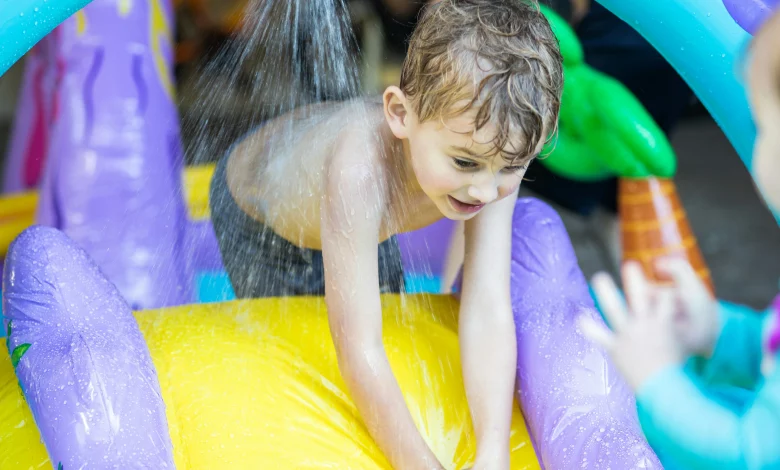
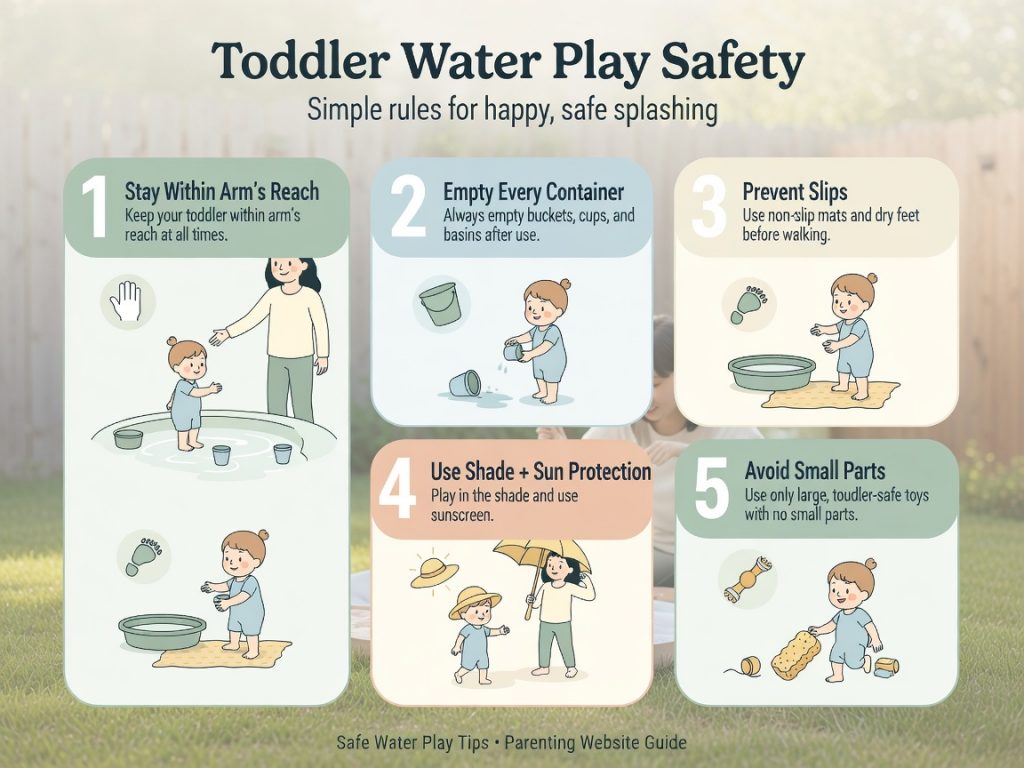
Before a single drop hits the patio, a few non-negotiables. Drowning is fast, silent, and doesn’t require a pool a bucket or basin is enough.
Use Active Supervision
According to the CDC, drowning is the leading cause of death for children 1 to 4 years old, and it can happen in seconds and is often silent. Drowning can happen in seconds and is often silent, and it can happen to anyone, any time there is access to water, including smaller water bodies like bathtubs and water-filled buckets. This isn’t limited to pools. A basin with two inches of water is enough.
The American Academy of Pediatrics is specific about what “supervising” actually means: Whenever infants and toddlers are in or around water, a supervising adult should be within an arm’s length, providing constant touch supervision, with full attention and no distracting activities like texting, socializing, or chores. That’s the bar for every activity on this list not “nearby,” but arm’s length, eyes on the child, phone away.
Featured Snippet: Active supervision for toddler water play means staying within arm’s reach at all times, with your full attention on the child, not glancing over from your phone or a nearby chair. Assign one adult as the designated “water watcher” if more than one caregiver is present, so no one assumes someone else is watching.
Empty Every Container Immediately
Buckets, basins, tubs, trays, inflatable pools, watering cans, and toy bins that hold water should be emptied and turned upside down the moment play ends. Among children ages 1–4, most drownings happen in home swimming pools, and immediately draining buckets, baths, and wading pools after each use is a core recommendation. A toddler doesn’t need a full pool to be at risk a forgotten basin by the back door is enough.
Prevent Slips and Falls
Wet pavement and tile get slippery fast. Play on a stable, non-slip surface where possible, keep a towel down to catch spills, and check that outdoor footwear (or bare feet) has decent grip. Wipe up standing water between activities rather than letting it pool near the play area.
Protect Toddlers From Heat and Sun
Outdoor water play often happens in the hottest part of the day, which raises its own risks. Toddlers and preschool children cannot regulate their body temperatures well and need more water when the weather is hot, so regularly scheduled water breaks encourage active play without dehydration. For sun protection, the American Academy of Pediatrics recommends applying sunscreen 15 to 30 minutes before going outside, since it needs time to absorb, and reapplying every two hours or after swimming, sweating, or toweling off.
Before your toddler sits or kneels on any surface, touch it yourself first pavement, dark tile, metal, and dark plastic can all get hot enough to burn small hands and knees within minutes of direct sun.
Avoid Choking and Poisoning Hazards
Small parts and a shallow basin are a bad combination for a toddler who still mouths objects. Skip pom-poms, beads, small building pieces, tiny natural objects, and anything that could fit through a toilet paper tube. Stay away from unknown plants, berries, mushrooms, and any garden chemicals or fertilizer near the play area.
Use Safe Materials
Stick to sturdy plastic containers, large washable toys, and child-safe, non-toxic materials. Skip glass, sharp-edged containers, strong fragrances, essential oils, and harsh soaps, a toddler’s hands go straight from the water to their mouth.
What You Need for Cheap Toddler Water Play
Most of this list is already in your kitchen or recycling bin:
- Shallow plastic basin
- Large plastic cups
- Measuring jug
- Large kitchen sponge
- Plastic spoons
- Colander
- Spray bottle (child-safe, never previously used for chemicals)
- Washable brush
- Towels
- Large plastic toys
- Ice tray
- Child-safe sidewalk chalk
- Recycled plastic bottles
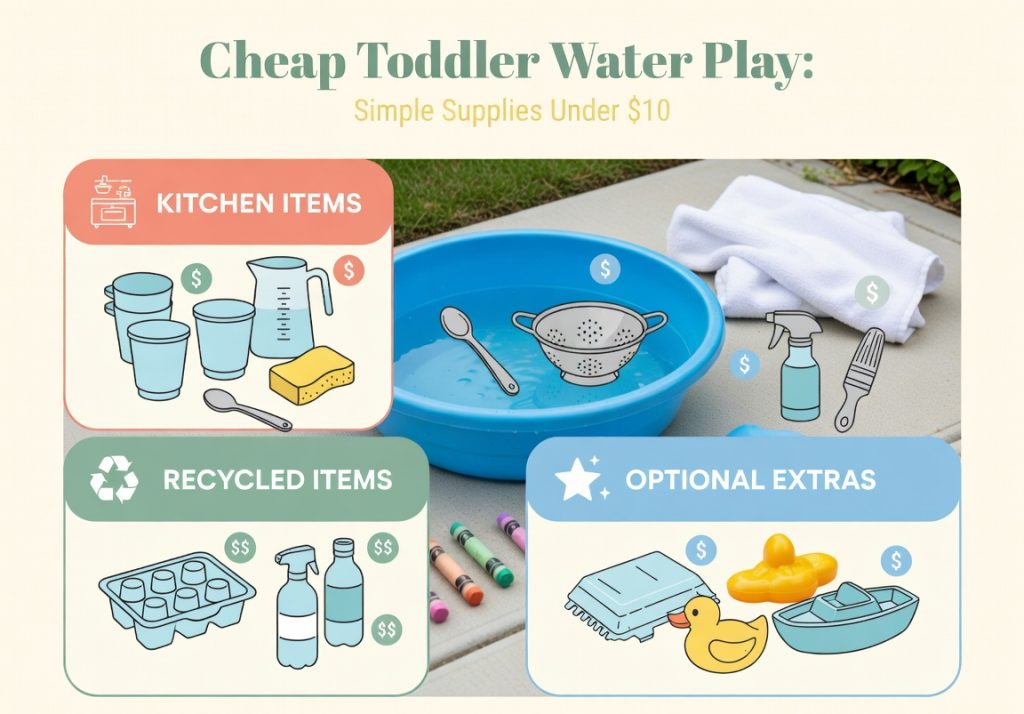
If you already own most of this, several activities below cost literally $0. For recycled bottles or containers, check every edge for sharpness before handing them to your toddler, and wash thoroughly with warm water and dish soap first.
How to Choose the Right Water Activity
Pick a water activity based on your toddler’s age, whether they still mouth objects, how much space and time you have, the mess level you can handle, the weather, and what your toddler is currently obsessed with cars, animals, or “helping”
Consider:
- Child’s age : under 2 needs simpler, larger-piece activities
- Mouthing habits : skip small parts if your toddler still puts everything in their mouth
- Available space : a balcony needs different setups than a backyard
- Your available time : some activities need 2 minutes of setup, others need 10
- Desired mess level : some days you want low mess, some days you don’t care
- Weather : hot afternoons call for shade and hydration breaks
- Required supervision level : all of these need active supervision, but some need closer hands-on involvement
- Child’s current interests : a car-obsessed toddler will engage longer with the toy car wash than with color mixing
| Activity type | Best for | Typical setup | Mess level |
|---|---|---|---|
| Water painting | Busy parents, younger toddlers | 2–3 minutes | Low |
| Sponge transfer | Fine-motor play | 3–5 minutes | Low to medium |
| Toy washing | Pretend play | 5 minutes | Medium |
| Mud kitchen–style play | Longer sensory sessions | 5–10 minutes | High |
15 Backyard Water Play Ideas Under $10
A quick note before you dive in: these play durations are approximate. Some toddlers will stay with an activity for 20 minutes; others will be done in 4. Both are normal.
1. Water Painting
Age: 18 months–4 years · Cost: $0–$5 (€0.00 to €4.28 EUR), assumes existing brushes
Prep time: 2 minutes · Play duration: 5–15 minutes · Cleanup: 2 minutes · Mess level: Low · Supervision: Arm’s length
Materials: Bucket of clean water, large paintbrushes, rollers, or sponges.
Instructions: Let your toddler “paint” pavement, outdoor tiles, a fence, or a suitable wall with plain water. Talk through what happens as the wet patch turns dark, then fades back to “dry” as it evaporates.
Developmental opportunity: Early vocabulary (“wet,” “dry,” “dark,” “gone”), shoulder and wrist strength, cause and effect.
Younger adaptation: Large sponge stamping instead of a brush. Older variation (3–4 years): Draw shapes, letters, or a simple road for toy cars. Safety note: Only use water-safe surfaces, and watch for slippery wet patches near the play area. Free alternative: Use a single cup and one paintbrush instead of a full painting set.
2. Sponge Squeeze and Transfer
Age: 18 months–3 years · Cost: $2–$4 (€1.71 to €3.46 EUR) · Prep time: 3 minutes · Play duration: 5–10 minutes · Cleanup: 3 minutes · Mess level: Low to medium · Supervision: Arm’s length
Materials: Two shallow containers, one large sponge.
Instructions: Place the containers a short distance apart. Your toddler soaks the sponge in one, carries it over, and squeezes it into the other.
Developmental opportunity: Hand strength, bilateral coordination, early measurement concepts.
Younger adaptation: Squeeze the sponge directly over one bowl without carrying it. Older variation: Compare which of two different sponges transfers more water. Safety note: Use a large sponge (no small pieces) and keep the water shallow enough that a fall wouldn’t submerge the face. Free alternative: A washcloth works instead of a purchased sponge.
3. Wash-the-Toys Station
Age: 2–4 years · Cost: $0–$5 (€0 to €4.28 EUR) · Prep time: 5 minutes · Play duration: 10–20 minutes · Cleanup: 5 minutes · Mess level: Medium · Supervision: Arm’s length
Materials: Shallow basin, large plastic toys, a cloth, a large sponge.
Instructions: Fill the basin with a few inches of water and let your toddler scrub their favorite large toys clean, then dry them with a towel.
Developmental opportunity: Pretend play, care-taking behavior, fine-motor scrubbing.
Younger adaptation: Wash just two or three toys to keep the session short. Older variation: Sort toys into “clean” and “needs washing” piles first. Safety note: Avoid toys with small, detachable parts that could come loose in water. Supervise continuously, a basin is still a drowning hazard. Free alternative: Use toys you already own; skip buying anything new for this one.
4. Watering Plants
Age: 15 months–4 years · Cost: $0–$5 (€0 to €4.28 EUR) · Prep time: 1 minute · Play duration: 5–10 minutes · Cleanup: 1 minute · Mess level: Low · Supervision: Arm’s length
Materials: Small, stable watering can or a child-safe spray bottle.
Instructions: Let your toddler water plants that are safe for them to touch.
Developmental opportunity: Gross-motor control, responsibility, plant-care vocabulary.
Younger adaptation: Use a small cup with an adult pouring alongside. Older variation: Count the plants, or talk about which soil looks “wet” vs. “dry.” Safety note: Confirm the plants are non-toxic and the area is free of fertilizer, pesticide, sharp garden tools, or standing water. Free alternative: Reuse an empty, thoroughly washed water bottle with holes poked in the cap instead of buying a watering can.
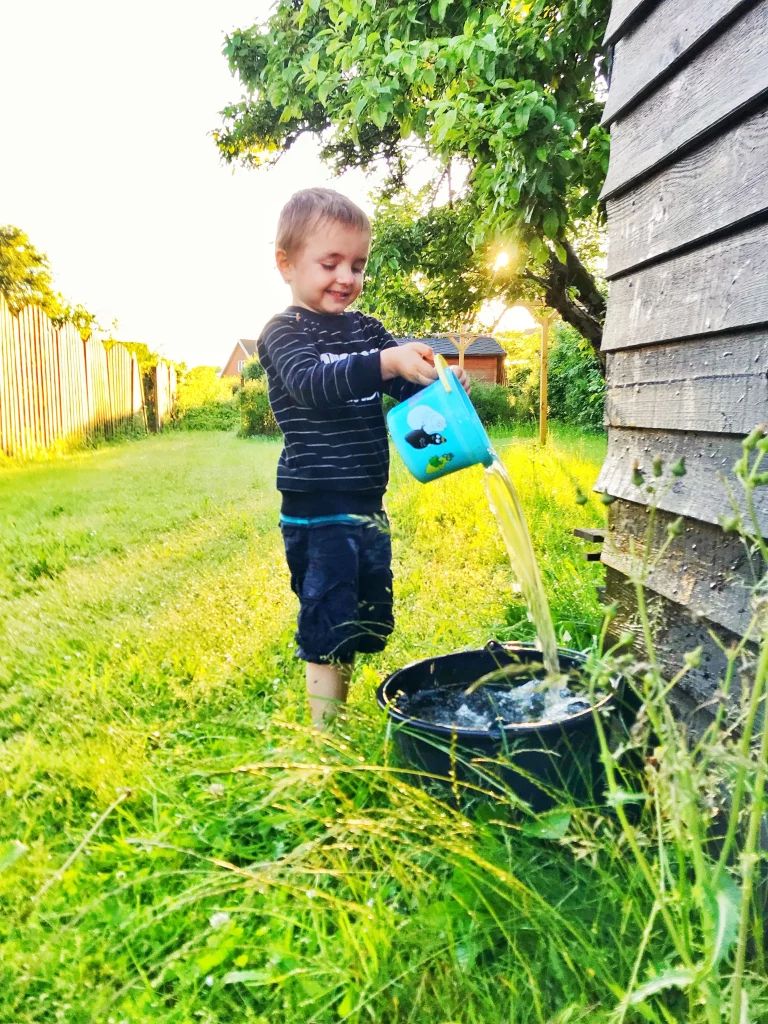
5. Pour-and-Scoop Station
Age: 18 months–4 years · Cost: $3–$8 (€2.57 to €6.86) · Prep time: 3 minutes · Play duration: 10–20 minutes · Cleanup: 5 minutes · Mess level: Medium · Supervision: Arm’s length
Materials: Shallow basin, large cups, measuring jug, colander, large spoon.
Instructions: Let your toddler pour, scoop, and transfer water freely between containers.
Developmental opportunity: Hand-eye coordination, early measurement, cause and effect.
Younger adaptation: One cup, one bowl, nothing more. Older variation: Add comparison words: full, empty, more, less, fast, slow. Safety note: Keep water shallow and containers stable so nothing tips unexpectedly. Free alternative: Kitchen cups and a colander you already own cover this entire activity for $0.
6. Sink-or-Float Investigation
Age: 2–4 years · Cost: $0–$5 (€0 to €4.28 EUR) · Prep time: 3 minutes · Play duration: 10–15 minutes · Cleanup: 3 minutes · Mess level: Low to medium · Supervision: Arm’s length
Materials: A basin and a small set of large, safe objects, a plastic ball, large sponge, plastic cup, large toy, wooden spoon.
Instructions: Ask your toddler to guess whether each object will sink or float, then test it together.
Developmental opportunity: Early prediction and reasoning, an introduction to basic physics concepts.
Younger adaptation: Skip the prediction step and simply demonstrate sinking and floating. Older variation: Draw or describe the results afterward. Safety note: Avoid small objects, sharp items, glass, or anything that could contain unsafe internal materials (like batteries). Free alternative: Use only toys and kitchen items already at home.
7. Bubble-Catching Water Play for Toddlers
Age: 15 months–4 years · Cost: $2–$5 (€1.71 to €4.29 EUR) · Prep time: 1 minute · Play duration: 10–15 minutes · Cleanup: 2 minutes · Mess level: Low · Supervision: Arm’s length
Materials: Bubble solution, a shallow water tray (optional).
Instructions: Blow bubbles over the play area and let your toddler point at, chase, pop, or count them.
Developmental opportunity: Gross-motor movement, visual tracking, early counting.
Younger adaptation: Blow just one bubble at a time. Older variation: Catch bubbles in a large cup, or try to pop only the biggest ones. Safety note: Keep bubble solution away from eyes and out of your toddler’s mouth, and wipe up any slippery spills right away. Free alternative: Make bubble solution from dish soap and water instead of buying a bottle.
8. Toddler Toy Car Wash
Age: 2–4 years · Cost: $0–$5 (€0 to €4.28 EUR) · Prep time: 5 minutes · Play duration: 10–20 minutes · Cleanup: 5 minutes · Mess level: Medium · Supervision: Arm’s length
Materials: Shallow basin, large washable toy vehicles, sponges, cloths.
Instructions: Let your toddler scrub their toy cars clean, then “park” them to dry.
Developmental opportunity: Pretend play, fine-motor scrubbing, sorting.
Younger adaptation: Wash just one large toy vehicle. Older variation: Draw a chalk parking lot and sort vehicles by size or color while they dry. Safety note: Avoid vehicles with small, detachable wheels, and watch for slippery wet patches nearby. Free alternative: Skip the sponges and use an old washcloth cut into pieces.
9. Color-Mixing Cups
Age: 2.5–4 years · Cost: $2–$6 (€1.71 to €5.18 EUR) · Prep time: 3 minutes · Play duration: 5–10 minutes · Cleanup: 5 minutes · Mess level: Medium · Supervision: Hands-on, arm’s length
Materials: Clear plastic cups, water, a small amount of child-safe, washable food coloring.
Instructions: Add a drop of coloring to each cup of water and let your toddler pour or mix them to see new colors form.
Developmental opportunity: Color recognition, cause and effect, early scientific curiosity.
Younger adaptation: Demonstrate a single color change without letting the child pour. Older variation: Predict and then combine two colors. Safety note: Skip this activity if your toddler is likely to drink the water, protect clothing and surfaces from staining, and use only non-toxic, washable coloring. Free alternative: Skip food coloring entirely and focus purely on pouring and mixing plain water.
10. Ice Rescue
Age: 18 months–4 years · Cost: $0–$3 (€0 to €2.57 EUR)· Prep time: Overnight freeze + 2 minutes setup · Play duration: 10–20 minutes · Cleanup: 3 minutes · Mess level: Low to medium · Supervision: Arm’s length
Materials: Ice tray, large toddler-safe toys or natural objects, warm water, a large spoon.
Instructions: Freeze large safe objects into a block of ice the night before. Let your toddler use warm water, a spoon, or their hands to melt the ice and “rescue” what’s inside.
Developmental opportunity: Patience, cause and effect, temperature vocabulary.
Younger adaptation: Use a shallow ice tray with large, non-swallowable objects. Older variation: Predict which ice block melts faster in sun versus shade. Safety note: Avoid small objects, sharp tools, and very hot water; supervise the entire activity. Free alternative: Freeze water alone with no added objects and let your toddler simply explore melting.
11. DIY Recycled-Bottle Water Wall
Age: 2.5–4 years · Cost: $0–$8 (€6.86 EUR) · Prep time: 10 minutes · Play duration: 15–25 minutes · Cleanup: 5 minutes · Mess level: High · Supervision: Arm’s length
Materials: Clean, sturdy plastic bottles with edges removed or covered, a stable fence or board, a basin.
Instructions: Secure the bottles firmly to a stable structure so water poured in flows through and out into a basin below.
Developmental opportunity: Cause and effect, gross-motor pouring, early engineering thinking.
Younger adaptation: Use just one funnel pouring into one container. Older variation: Experiment with different bottle angles and compare water flow. Safety note: Inspect the whole structure before play, make sure no unsafe edges are reachable, and empty the collection basin immediately afterward. Free alternative: Skip mounting hardware and simply hold two connected bottles by hand.
12. Floating Boats
Age: 2–4 years · Cost: $0–$4 (€0.00 to €3.43 EUR)· Prep time: 5 minutes · Play duration: 10–15 minutes · Cleanup: 3 minutes · Mess level: Low to medium · Supervision: Arm’s length
Materials: A clean plastic container, a large sponge, or a clean plastic lid with no sharp edges.
Instructions: Build simple boats from safe, large household materials, then float them in a basin.
Developmental opportunity: Basic engineering concepts, imaginative play.
Younger adaptation: Float one large object and talk about it moving. Older variation: Test whether the boat can carry small plastic toys without sinking. Safety note: Avoid staples, toothpicks, or any craft materials that could break into sharp or small pieces. Free alternative: Use only recycled containers already headed for the recycling bin.
13. Outdoor Pretend Kitchen
Age: 2–4 years · Cost: $0–$5 (0 to 4.28 EUR)· Prep time: 5 minutes · Play duration: 15–25 minutes · Cleanup: 5 minutes · Mess level: Medium to high · Supervision: Arm’s length
Materials: Large pots, plastic bowls, wooden spoons, clean water, safe large leaves or washable toy food.
Instructions: Set up a pretend kitchen where your toddler stirs, pours, and “cooks” with water.
Developmental opportunity: Pretend play, vocabulary building, social-emotional expression.
Younger adaptation: Simple stirring and pouring imitation. Older variation: Create a pretend menu and use vocabulary like “full,” “empty,” “hot,” “cold” while clarifying that pretend food isn’t for eating. Safety note: Avoid unknown plants, soil that animals may have used, small objects, and hot water. Free alternative: Use kitchen items you already have rather than a toy kitchen set.
14. Nature Water Soup
Age: 18 months–4 years · Cost: $0 · Prep time: 2 minutes · Play duration: 10–15 minutes · Cleanup: 3 minutes · Mess level: Medium · Supervision: Arm’s length
Materials: Shallow basin, clean water, a few safe, large natural objects from known, pesticide-free plants.
Instructions: Let your toddler stir and combine large leaves or sturdy flower heads into a “soup.”
Developmental opportunity: Sensory exploration, sorting, nature vocabulary.
Younger adaptation: Use just one or two large objects in plain water. Older variation: Sort objects by color, texture, or size before adding them. Safety note: Never use unknown plants, berries, mushrooms, sharp sticks, or small pieces. Prevent tasting, and wash hands thoroughly afterward. Free alternative: This one is already $0, no purchase needed.
15. Splash-and-Move Station
Age: 2–4 years · Cost: $0–$8 (€6.92 EUR)· Prep time: 2 minutes · Play duration: 10–20 minutes · Cleanup: 5 minutes · Mess level: High · Supervision: Arm’s length
Materials: A child-safe sprinkler or spray bottle.
Instructions: Use gentle spray for movement games, stepping over water, chasing the spray, or moving like different animals.
Developmental opportunity: Gross-motor skills, following instructions, active play.
Younger adaptation: Spray a target on the ground rather than directly at the child. Older variation: Add a chalk path with “stop,” “go,” “jump,” and “turn” instructions. Safety note: Use only in a secure, enclosed area, protect eyes and face from direct spray, and stop if your toddler becomes cold, tired, overheated, or upset. Free alternative: A single spray bottle costs less than $2 and covers this entire activity.
Budget Breakdown
| Activity | Estimated cost | Materials reused? | Main cost-saving option |
|---|---|---|---|
| 1. Water painting | $0–$5 | Yes | Use one paintbrush |
| 2. Sponge transfer | $2–$4 | Yes | Use a washcloth |
| 3. Toy washing | $0–$5 | Yes | Use existing toys |
| 4. Watering plants | $0–$5 | Yes | Reuse a bottle with holes |
| 5. Pour and scoop | $3–$8 | Yes | Use kitchen cups |
| 6. Sink or float | $0–$5 | Yes | Use items at home |
| 7. Bubble catching | $2–$5 | Partial | DIY bubble solution |
| 8. Toy car wash | $0–$5 | Yes | Use a cut-up washcloth |
| 9. Color mixing | $2–$6 | Partial | Skip the coloring |
| 10. Ice rescue | $0–$3 | Yes | Freeze plain water only |
| 11. Recycled water wall | $0–$8 | Yes | Hold bottles by hand |
| 12. Floating boats | $0–$4 | Yes | Use recycling-bin items |
| 13. Pretend kitchen | $0–$5 | Yes | Use kitchen items |
| 14. Nature water soup | $0 | Yes | Already free |
| 15. Splash and move | $0–$8 | Partial | One spray bottle |
The “under $10” promise refers to each individual activity, not the cost of buying every item on this list at once. Most households will spend under $15 total to unlock all 15 ideas, since supplies overlap heavily across activities.
Best Water Activities by Age
The best water activities for toddlers depend on age, younger toddlers do best with simple pouring, sponges, and watering plants, while 3- to 4-year-olds can handle more complex activities like water walls, ice rescue, and sorting games.
| Age | Best activities | What to expect |
|---|---|---|
| 1–2 years | Water painting, sponge play, toy washing, bubbles, watering plants | Short bursts, repetition, mouthing, close hands-on supervision |
| 2–3 years | Pouring, color mixing, car washing, floating objects, simple pretend play | More imitation, simple choices, early problem-solving, emerging language |
| 3–4 years | Water walls, ice rescue, sink-or-float experiments, boats, sorting, movement games | Longer focus, predictions, pretend play, following multi-step instructions |
These age ranges are approximate, every toddler develops at their own pace, and a 20-month-old who loves pouring might handle activities typically listed for older kids.
Low-Mess Water Play Ideas
If you’re not up for a full backyard cleanup today, lean on: water painting, sponge transfer, watering plants, bubble play, controlled pouring, and floating-object experiments.
To keep it contained:
- Use a shallow tray as the play boundary
- Place a towel underneath the whole setup
- Keep a dry outfit nearby
- Limit the number of tools to two or three
- Set a clear boundary for where water is allowed to go
- Empty containers the moment play ends
High-Energy Water Play Ideas
On days when your toddler needs to burn energy, reach for: spray-bottle targets, sprinkler movement games, sponge tossing, the toy car wash, water-wall play, and animal-movement games.
Wet surfaces get slippery fast during high-energy play, so check footing often, keep the play zone away from steps or hard edges, and pause for a water break before anyone gets overheated.
Water Play for Small Outdoor Spaces
A backyard isn’t required. Apartment terraces, courtyards, small patios, shared outdoor areas, and even a shaded table can host most of the low-mess activities above water painting, sponge transfer, watering plants, and pour-and-scoop all work well in tight spaces.
If you’re setting up a backyard play area for toddlers from scratch, water play is one of the cheapest additions. You can also check our small backyard play areas for toddlers article with friendly budget.
Balcony safety note: Never leave a toddler alone near railings, balcony furniture, open windows, or edges even for a few seconds, even during water play. Empty every water container the moment play ends, since a forgotten basin near a railing is a real risk.
Hot-Weather Water Play for Toddlers
Featured Snippet: The safest time for toddler water play in hot weather is early morning or late afternoon, in the shade, with frequent water breaks, and always checking that pavement, tile, metal, or plastic surfaces aren’t too hot before your toddler touches them.
- Choose early morning or late afternoon over midday sun
- Use shade whenever it’s available
- Offer drinking water frequently, even if your toddler doesn’t ask
- Dress your toddler in breathable, lightweight clothing
- Use a hat and appropriate sun protection
- Check surfaces before play, pavement, dark tile, metal, and plastic can burn
- Stop immediately if your toddler seems unusually tired, flushed, dizzy, confused, or distressed
- Never leave your toddler in a parked vehicle, even briefly
How to Keep Toddlers Engaged Longer
- Start with one container and two tools, more choices can overwhelm rather than extend play
- Follow your toddler’s interests instead of your plan
- Demonstrate one action, then pause and let them try
- Add only one new challenge at a time
- Use a pretend-play theme: car wash, café, kitchen, or garden
- Introduce simple vocabulary as you go
- Let your toddler repeat the same action as many times as they want
- Rotate activities instead of dumping every material out at once
- Stop while it’s still fun, not when your toddler melts down
- 10–20 minutes is a genuinely successful play session, you don’t need an hour
Safe Substitutions for Risky Materials
| Avoid or use cautiously | Safer alternative |
|---|---|
| Pom-poms | Large sponges |
| Beads | Large floating balls |
| Small LEGO pieces | Large plastic blocks |
| Sharp sticks | Large wooden spoons |
| Glass containers | Sturdy plastic containers |
| Unknown plants | Washable toy plants or known safe leaves |
| Strong soap | Plain water or minimal child-safe soap |
| Small hidden toys | Large, easy-to-grip toys |
An alternative is only actually safer when it’s still age-appropriate for your specific child and used under active supervision, no substitution replaces watching your toddler.
Easy Cleanup After Water Play for Toddlers
- Prep towels and a dry outfit before you start, not after
- Use a washable mat under the play zone
- Rinse and dry reusable toys before storing them
- Empty every container immediately
- Check for and remove standing water
- Look for slippery surfaces before letting your toddler run off to the next thing
- Store materials together in one labeled bin
- Use a “last pour, then cleanup” routine so the ending isn’t a surprise
- Let older toddlers help carry cups or put toys away safely, and under supervision
A Seven-Day Water Play Plan
- Day 1: Water painting
- Day 2: Sponge transfer
- Day 3: Toy wash
- Day 4: Sink-or-float play
- Day 5: Color mixing
- Day 6: Watering plants
- Day 7: Car wash or pretend kitchen
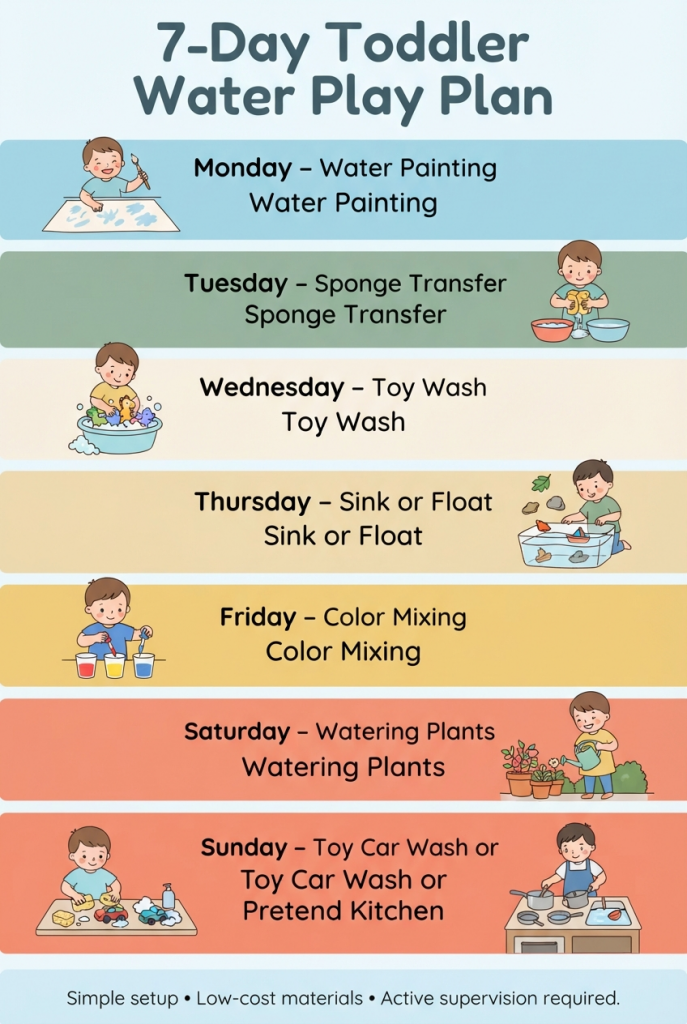
Low-energy parent option: water painting, watering plants, and bubble play need almost no setup and can be run from a chair nearby (still within arm’s reach). On hot or space-limited days, swap in any activity from the low-mess or small-space lists above.
Frequently Asked Questions
How do I keep a toddler safe around a bucket or water bin?
Never leave a filled bucket unattended, even for a few seconds, and empty it immediately once play is finished, a bucket left standing is one of the most overlooked hazards in a backyard.
What are easy water play ideas for toddlers?
Water painting, sponge transfer, toy washing, and pouring water between cups are some of the easiest options, they need almost no setup and use items most households already own.
How much water is safe for toddler water play?
Even a few inches of water in a basin or bucket can be a drowning risk for a toddler, so the amount matters less than the supervision. Stay within arm’s reach the entire time, regardless of how shallow the water looks.
What water activities are suitable for a 1-year-old?
Simple, low-choking-risk options work best: sponge play, water painting with a large brush, watering plants with help, and bubble catching.
The Bottom Line
Meaningful water play can cost almost nothing. A bucket, a sponge, a brush, a few cups, or a handful of large plastic toys is genuinely enough to hold your toddler’s attention and build real developmental skills, no water table required.
Keep active supervision non-negotiable, watch for heat, stick to safe materials, and empty every container the second play ends. Skip the elaborate Pinterest-worthy setup today and just grab a basin and a sponge, that’s usually the one your toddler remembers anyway.