Why Do Babies Fight Sleep? 7 Real Reasons by Age
The Age-by-Age Guide Every Exhausted Parent Needs at 3 AM — AAP-Backed + Real Solutions
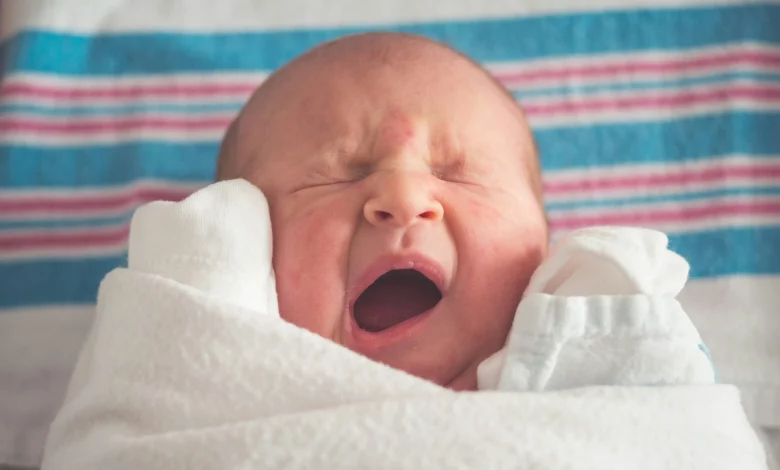
- Why Do Babies Fight Sleep?
- Baby Fighting Sleep by Age — What Is Actually Happening
- Why Do Newborns Fight Sleep? (0-3 Months)
- Why Does a 4-Month-Old Fight Sleep? (4-6 Months)
- Why Do Babies Fight Sleep at 6-12 Months?
- What Are the Signs My Baby Is Fighting Sleep?
- How Long Is Normal for a Baby to Fight Sleep?
- Normal settling times by age :
- Why Does My Baby Fight Sleep So Hard at Night?
- Bedtime is too late
- The last nap ended too close to bedtime
- Second wind
- How to Stop Baby Fighting Sleep — What Actually Works
- Fix wake windows first
- Move bedtime earlier
- Create a consistent pre-sleep sequence.
- Reduce stimulation in the 30 minutes before sleep
- Address sleep associations gradually
- Frequently Asked Questions
- Is it normal for babies to fight sleep every single nap?
- Why Do Babies Fight Sleep? but still clearly tired?
- How long should I let my baby fight sleep before going in?
- Why do babies fight sleep more at night than during naps?
- Can teething cause a baby to fight sleep?
- The Bottom Line
Babies fight sleep because their nervous system is still learning to regulate. The most common causes are overtiredness from missed wake windows, overstimulation before sleep, and undertiredness from napping too early. The fix depends on your baby’s age. This guide breaks it down by age group with specific signs and solutions. Understanding why do babies fight sleep starts with their nervous systemnot their behavior.
Medical Disclaimer: This article is for informational purposes only and does not replace professional medical advice. Always consult your pediatrician with concerns about your baby’s sleep or development.
Why do babies fight sleep even when they are clearly exhausted?
It is 7 PM. You can see it on your baby’s face. But the moment you try to put them down, they scream.
This is one of the most searched baby sleep questions on the internet, and most answers give you a list of eight generic reasons that leave you more confused than before.
This article gives you the real answer. Age-specific, practical, and based on what is actually happening in your baby’s developing nervous system.
Why Do Babies Fight Sleep?
The short answer: your baby’s brain and body are not yet in sync.
Sleep requires a precise combination of tiredness, calm, and the right biological window. When any of those three is off even slightly the baby fights sleep.
Also according to the AAP, newborns require 14-17 hours of sleep per 24-hour period, while infants aged 4-12 months need 12-16 hours including naps
The three root causes, in order of frequency:
- Overtiredness : is the most common. When a baby misses their wake window and stays awake too long, cortisol floods their system. This stress hormone makes them appear wired and alert — but they are actually exhausted. A baby past their sleep window is neurologically harder to settle.
A 2006 study in Behavioral Sleep Medicine found fragmented sleep in 12-36-month-olds correlated with higher awakening cortisol levels and internalizing behaviors.
Matching your baby’s awake time to their age is the single most effective fix, see our complete baby wake windows by age guide for exact numbers by month and a bonus chart included.
- Overstimulation : is the second. Screens, noise, activity, visitors, or even high-energy play right before sleep keeps the nervous system in alert mode. The brain needs time to downshift.
- Undertiredness : is less common but real. If a baby napped too recently or their wake window was too short, they are simply not tired enough to sleep again.
Baby Fighting Sleep by Age — What Is Actually Happening
Why Do Newborns Fight Sleep? (0-3 Months)
Newborns have no circadian rhythm. Their sleep-wake cycle is driven entirely by hunger, discomfort, and overstimulation, not by time of day.
Common causes at this age:
- Wake windows are only 45-60 minutes — most parents keep newborns awake too long
- Startle reflex (Moro reflex) wakes them during sleep transitions
- Gas, reflux, or feeding discomfort disrupts settling
- Overstimulation from well-meaning visitors or activity
What works: Tight swaddle, white noise, and watching wake windows obsessively. At this age, 60 minutes awake is often already too long.
According to the AAP, newborns need 14-17 hours of sleep per 24-hour period, spread across multiple short cycles.
Why Does a 4-Month-Old Fight Sleep? (4-6 Months)
This is the most brutal stage for most parents, and for good reason. Also this is the age when why do babies fight sleep becomes the most searched question on the internet.
At 4 months, a permanent change happens in how babies cycle through sleep stages. They begin moving through lighter sleep phases more frequently, just like adults. The problem: they have not yet learned to connect sleep cycles independently.
Common causes at this age:
- The 4-month sleep regression is permanent — it is not a phase that passes, it is a new normal
- Wake windows extend to 90-120 minutes — timing becomes critical
- Sleep associations form rapidly — if they need you to fall asleep, they need you every cycle
- Swaddle transition disrupts sleep if not handled correctly
What works: Watch wake windows by the minute at this age. A baby who falls asleep in 5 minutes was ready. A baby who fights for 30 minutes was either overtired or not tired enough.
If your 4-month-old has also started rolling during sleep, read our guide on what to do when baby rolls onto stomach and can’t roll back.
Why Do Babies Fight Sleep at 6-12 Months?
By 6 months, the reasons shift. Your baby is now cognitively aware enough to experience FOMO, fear of missing out. Sleep means separation from you and from stimulation.
Common causes at this age:
- Separation anxiety peaks between 6-10 months
- Developmental leaps disrupt sleep during active learning periods
- Nap transitions (3 naps to 2 to 1) create temporary sleep disruption
- Teething adds physical discomfort on top of everything else
- Wake windows extend to 2-4 hours — undertiredness becomes more common
What works: Consistent bedtime routine signals that sleep is coming. The sequence matters more than the individual steps bath, feed, book, song, sleep done in the same order every night trains the brain to anticipate sleep.
What Are the Signs My Baby Is Fighting Sleep?
Recognizing the difference between a baby who is overtired versus undertired saves hours of frustration.
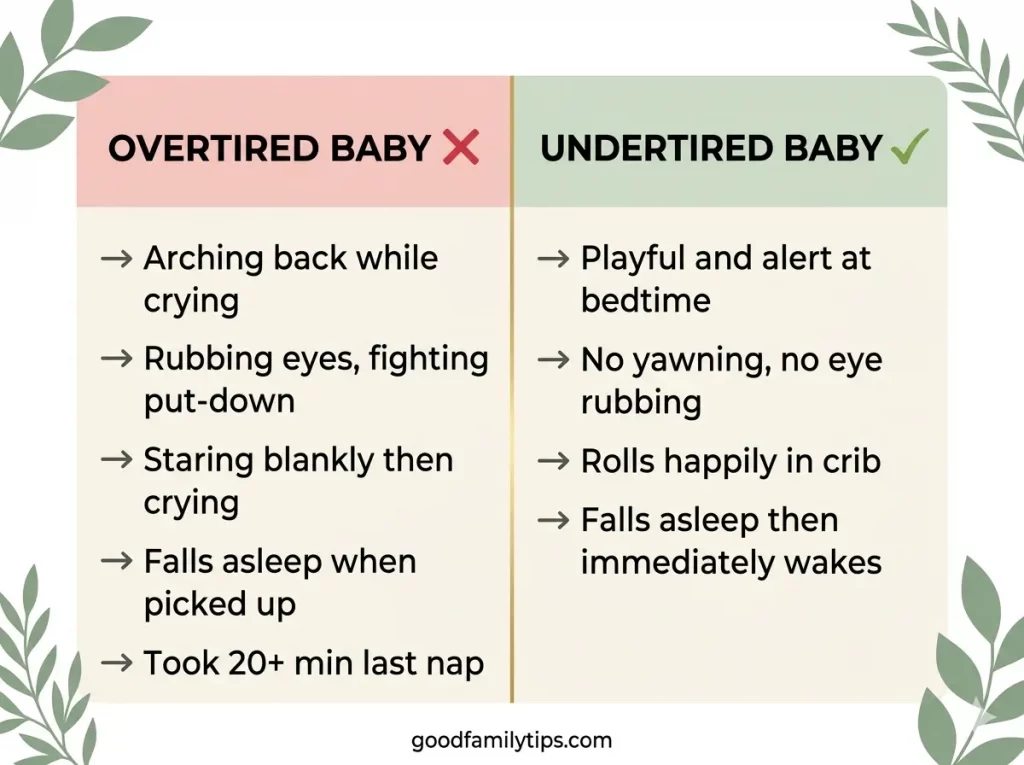
Signs of overtiredness:
- Arching back while crying
- Rubbing eyes but fighting being put down
- Staring blankly then suddenly crying
- Falls asleep the moment you pick them up
- Took longer than 20 minutes to fall asleep at last nap
Signs of undertiredness:
- Playful and alert at bedtime
- No yawning, no eye rubbing
- Rolls around happily in the crib
- Falls asleep within 2 minutes then immediately wakes
Signs of overstimulation:
- Turns head away from stimulation
- Cries when you make eye contact
- Arches away from you
- Hiccups or sneezes repeatedly in a stimulating environment
How Long Is Normal for a Baby to Fight Sleep?
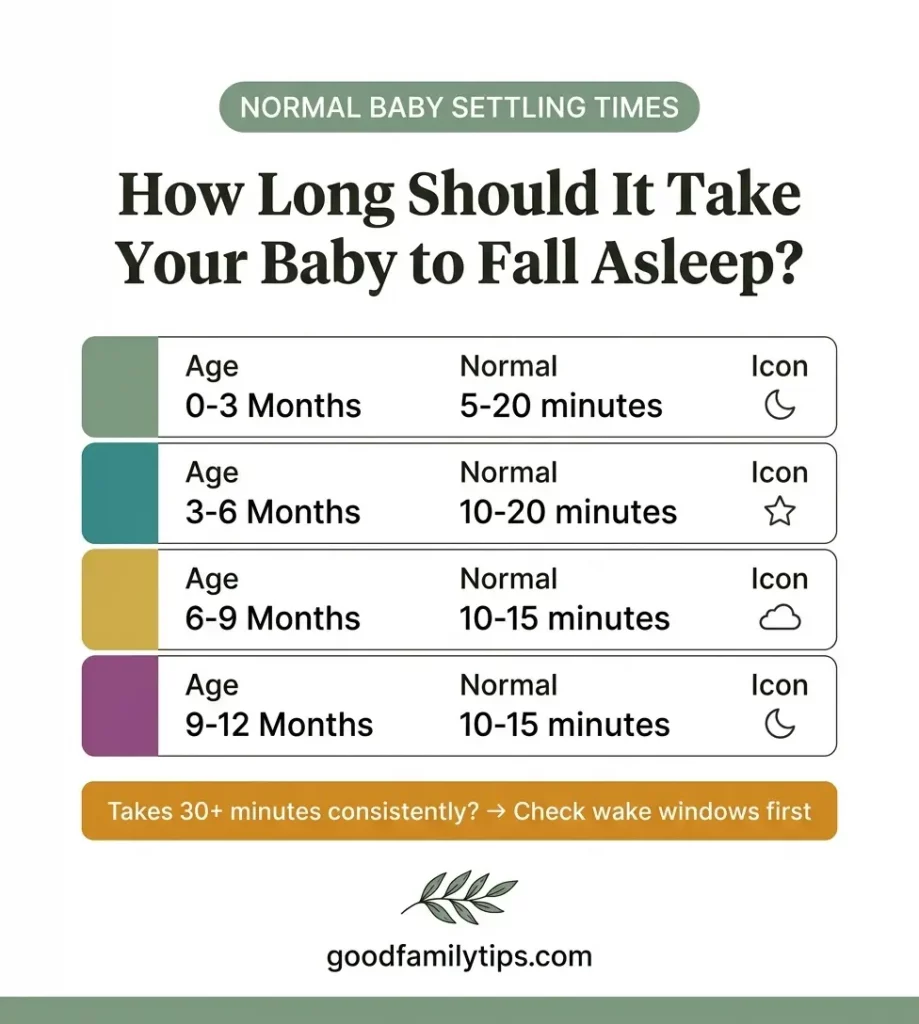
Most parents want a number. Here it is. According to sleep researchers, a baby who takes longer than 20 minutes to fall asleep is either overtired, undertired, or overstimulated — not simply “difficult.”
Normal settling times by age :
| Age | Normal settling time |
| 0-3 months | 5-20 minutes |
| 3-6 months | 10-20 minutes |
| 6-12 months | 10-15 minutes |
A study published in the journal Sleep Medicine found that infants who consistently took longer than 30 minutes to fall asleep had measurably higher cortisol levels — confirming the overtiredness link.
If your baby is consistently over these thresholds, the wake window is almost certainly the first thing to adjust.
Why Does My Baby Fight Sleep So Hard at Night?
Night resistance is often different from nap resistance and the cause matters.
The most common reasons for intense bedtime resistance:
Bedtime is too late
For babies under 12 months, the optimal bedtime window is typically between 6:30 PM and 8:00 PM. A bedtime of 9 PM almost always means an overtired baby who has been awake far too long.
NSF emphasizes sleep needs like 14-17 hours for newborns but lacks specific polls citing 60% of parents reporting bedtime resistance as primary in the first year. General studies note high variability in infant sleep, with night wakings persisting for many beyond 12 months
For a complete overview of safe sleep positioning and environment, our Ultimate Baby Sleep Guide that covers everything from newborn to 12 months.
The last nap ended too close to bedtime
A nap that ends at 5 PM followed by a 7 PM bedtime leaves only 2 hours of wake time — often not enough for a 9-month-old whose wake window is 3-4 hours.
Second wind
If a baby passes their sleep window, cortisol kicks in and creates a false burst of energy. The baby appears suddenly happy and alert. This is the worst time to fight bedtime — the window has passed. Give it 20-30 minutes and try again.
Sleep association dependency. If your baby has only ever fallen asleep while feeding, being held, or rocked, their brain has no pathway to sleep independently. Every bedtime — and every night waking — requires the same input.
How to Stop Baby Fighting Sleep — What Actually Works
The reason why do babies fight sleep at night is almost always timing-related. There is no single solution because the cause determines the fix. But these strategies address the most common root causes:
Fix wake windows first
Before anything else, check that your baby’s awake time matches their age. Most parents keep babies awake too long. Check our [baby wake windows by age guide] for the exact numbers.
Move bedtime earlier
Counter-intuitively, an earlier bedtime often means a baby who falls asleep faster and stays asleep longer. Overtired babies take longer to settle — not shorter.
Create a consistent pre-sleep sequence.
Three to four steps, same order, every night. The routine itself becomes the sleep signal.
Reduce stimulation in the 30 minutes before sleep
Dim lights, lower voices, no screens. The nervous system needs time to downshift from alert to calm.
Address sleep associations gradually
If your baby only sleeps while being held or fed, they need support to learn to fall asleep independently. This does not require crying it out — but it does require consistency.
If your baby only sleeps while being held, our guide on baby won’t sleep unless held that covers the 3-step transition method.
Frequently Asked Questions
Is it normal for babies to fight sleep every single nap?
Yes, especially between 4-6 months when sleep architecture changes permanently. Consistent wake windows and a predictable pre-nap routine reduce fighting significantly within 1-2 weeks of implementation.
Why Do Babies Fight Sleep? but still clearly tired?
This is almost always overtiredness. When cortisol floods the system, babies appear wired and alert even when exhausted. Moving the nap or bedtime 15-20 minutes earlier usually resolves this within a few days.
How long should I let my baby fight sleep before going in?
For babies under 4 months — go in after 10 minutes of sustained crying. For babies over 4 months with no health concerns — 15-20 minutes is a reasonable window before intervening, depending on your approach to sleep training.
Why do babies fight sleep more at night than during naps?
Night sleep requires a longer sustained sleep period, which is harder for babies who have not learned to connect sleep cycles. Naps are shorter and easier. Night resistance often improves when daytime nap structure becomes consistent.
Can teething cause a baby to fight sleep?
Yes. Teething discomfort peaks in the evening and at night when there are fewer distractions. If your baby’s sleep resistance started suddenly alongside drooling, chewing, and gum swelling, teething is a likely contributing factor.
The Bottom Line
Babies fight sleep because something in the tiredness-calm-timing equation is off.
Most of the time it is a wake window issue. The fix is usually simpler than it feels at 7 PM when you have been trying for 45 minutes.
To understand more about why do babies fight sleep has a clear answer for every age group : check wake windows first
Medical Disclaimer: This article about why do babies fight sleep? is based on AAP guidelines and general pediatric sleep research. It is for informational purposes only and does not replace advice from your pediatrician.