Picky Eaters: 7 Signs to Worry + 5 Things That Actually Work
Stop the Mealtime Battles (Without Begging or Bribing)
- Quick Answer Box
- What Is Picky Eating – And What’s Normal at Each Age?
- When Should Parents Worry About Picky Eaters?
- Why Toddlers Become Picky Eaters (Root Causes)
- What Actually Works With Picky Eating Toddlers
- What Makes Picky Eating Worse (Common Parent Mistakes)
- Step-by-Step Mealtime Strategy That Reduces Stress
- Trust & Safety: An Important Note
- Quick Summary: Understanding Picky Eaters
- Frequently Asked Questions
- You’ve Got This
If you’ve ever watched your toddler push away a perfectly good plate of food only to ask for crackers ten minutes later, you’re not alone in the world of picky eaters. Last Tuesday, I watched my friend Sarah nearly cry into her spaghetti when her three-year-old announced that the noodles she’d loved just last week were now “yucky.” Sound familiar?
Here’s the truth: nearly every parent faces some version of toddler picky eating at some point. It’s frustrating, worrying, and honestly exhausting when you’re just trying to keep your kid nourished. But before you start Googling at midnight wondering if your child will eat chicken nuggets forever, let’s take a breath together.
This article will help you understand what’s actually happening with picky eating toddlers, when it’s just a normal phase, when you might need extra support, and most importantly, what strategies genuinely work without turning every meal into a battle. Whether you’re dealing with mild pickiness or full-blown food refusal, you’ll find practical guidance that actually helps.
Quick Answer Box
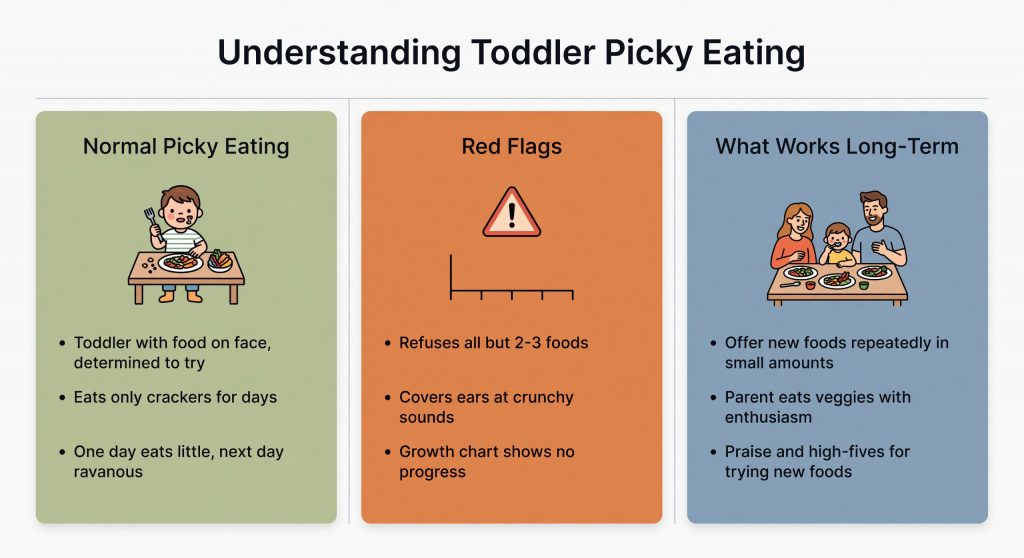
When Picky Eating Is Normal:
Between ages 1-5, food preferences changing weekly, refusing new foods 10+ times before trying them, wanting the same meals repeatedly.
Red Flags That Deserve Attention:
Consistent weight loss, eating fewer than 20 different foods, gagging or extreme distress at mealtimes, avoiding entire food groups for months.
What Actually Works Long-Term:
Repeated exposure without pressure, letting kids decide how much to eat, eating together as a family, staying neutral when they refuse food, and understanding this is a phase that passes.
What Is Picky Eating – And What’s Normal at Each Age?
Understanding picky eaters starts with knowing what’s developmentally appropriate. Picky eating is when children show strong food preferences, refuse new foods, or suddenly reject foods they previously enjoyed. But here’s what most parenting books don’t tell you clearly enough: selective eating in toddlers is completely developmentally normal.
Ages 1–2 Years
This is when picky eaters often emerge. Your baby who ate everything suddenly becomes suspicious of anything green. Toddlers this age are learning they’re separate people from you, and food becomes one arena where they can exercise control. They’re also growing more slowly than they did as infants, so their appetite naturally decreases. Don’t be shocked if your one-year-old eats like a bird some days and a horse others.
Ages 2–3 Years
Welcome to the peak of toddler picky eating. Two-year-old picky eaters are famous for demanding the same three foods on repeat. Tuesday it’s only mac and cheese. Wednesday, mac and cheese is “gross” and they’ll only eat toast. This isn’t defiance it’s normal brain development. Their need for sameness and routine extends to food, and new things can genuinely feel scary to them.
Ages 3–5 Years
Many kids start expanding their palates during preschool years, especially if they see peers eating different foods. But some remain cautious eaters, and that’s okay too. By this age, you’ll notice whether picky eating is improving, staying stable, or if there might be underlying sensory sensitivities at play.
The key? Most picky eaters gradually improve between ages 5-8 without any intervention beyond patient, pressure-free exposure.
When Should Parents Worry About Picky Eaters?
Most toddler feeding problems are temporary bumps, not mountains. But there are times when it makes sense to loop in your pediatrician. I’m not trying to scare you. I’m trying to help you trust your gut when something feels off with your child’s eating patterns.
Most of the time, this is just a phase. However, even with picky eaters, there are times when you need professional backup. Consider reaching out if you notice:
- Weight Concerns: Weight loss or failure to gain weight over several months. Even selective eaters should generally follow their growth curve.
- The “Under 20” Rule: Eating fewer than 20 total foods consistently. If your toddler eats only five things and gags at everything else, that is worth discussing.
- Genuine Distress: Mealtimes shouldn’t cause crying, gagging, vomiting, or extreme anxiety. This often goes beyond normal picky eaters behavior and into sensory processing concerns.
- Zero Food Groups: Complete avoidance of entire categories (like no vegetables at all) for more than a few months.
- Physical Trouble: Frequent choking or difficulty with textures that seems beyond typical learning.
Here’s what I want you to remember:
Talking to your doctor doesn’t mean you failed; it means you’re paying attention.

Most of the time, they’ll reassure you that you are on track. But sometimes, they might refer you to a feeding therapist or occupational therapist who specializes in picky eaters. These pros can make life so much easier for everyone, and early support is never wasted.
And if the doctor says everything is fine?
Trust that, too. Kids are resilient, and healthy eating habits develop over years, not weeks. You’ve got time.
Why Toddlers Become Picky Eaters (Root Causes)
Understanding why this happens can transform your entire approach to how to deal with picky eaters. This isn’t about blame it’s about biology and development driving these eating patterns.
The Need for Control and Independence
Toddlers are figuring out they’re their own people. They can’t control their bedtime, when you leave for work, or pretty much anything else. But they can absolutely control whether that broccoli goes in their mouth. Food becomes a safe place to exercise their growing autonomy. It’s actually a healthy developmental step, even when it’s making you want to pull your hair out.
Sensory Sensitivity
Some picky eaters are just more sensitive to textures, temperatures, smells, and tastes. What feels like a minor texture difference to you might feel genuinely overwhelming to them. This isn’t manipulation, their sensory system is legitimately processing things differently. Many selective eaters have heightened sensory awareness that makes certain foods feel unpleasant or even overwhelming.
Natural Appetite Changes
Remember how babies grow crazy fast their first year? That growth rate slows dramatically after 12 months, and appetite follows. A toddler might need significantly less food than you expect. They’re also amazing at self-regulating when we let them, eating more some days and less others based on actual hunger. This can look like picky eating when it’s really just reduced caloric needs.
Pressure and Past Food Battles
If mealtimes have become stressful, kids associate eating with tension. Past experiences of being pressured, forced, or made to sit until they finish create negative associations that can intensify picky eating behaviors. We’ve all been there trying to get “just one more bite” but it often backfires spectacularly.
Teething and Growth Spurts
Physical discomfort affects eating. A child dealing with molars coming in doesn’t want crunchy foods. During growth spurts, appetite can be unpredictable. Sometimes the simplest explanation is the right one.
Understanding these root causes helped me stop taking my son’s food refusals personally. He wasn’t trying to drive me crazy he was just being a typical toddler navigating his development.
What Actually Works With Picky Eating Toddlers
Let’s get into the practical stuff. These evidence-based strategies for managing picky eaters won’t work overnight, but they will work over time if you stay consistent.
Repeated Exposure Without Pressure
Research shows picky eaters might need to see a food 10-20 times before they’ll try it. Just having it on the table counts. Put a tiny amount of new food on their plate alongside safe foods. Don’t comment on whether they eat it. Your job is exposure, not consumption. This single strategy has helped countless parents of picky eaters see breakthroughs.
Division of Responsibility
This concept from feeding expert Ellyn Satter changed my life and can transform how you approach picky eaters: Parents decide what food is offered, when, and where. Kids decide whether to eat and how much. You’re not a short-order cook, and they’re not obligated to clean their plate. This removes the power struggle entirely.
Food Pairing Strategies
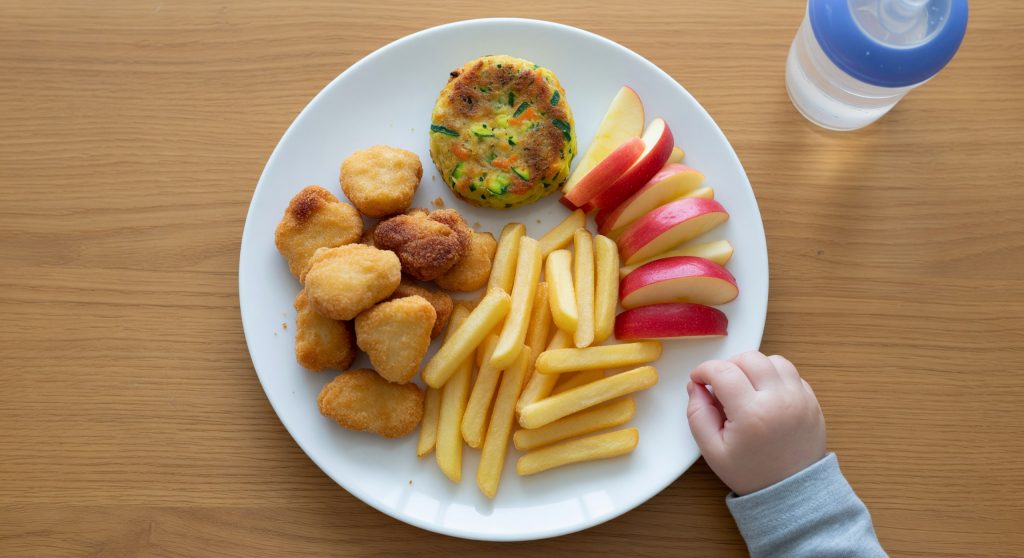
When serving meals to picky eaters, always include at least one “safe” food your child accepts alongside new or challenging foods. For example, if you’re having salmon and roasted vegetables, also put some bread or rice on the table. This ensures they won’t go hungry while still exposing them to variety.
Modeling Behavior
Kids learn by watching. Eat meals together when possible, and let them see you enjoying a variety of foods. Don’t make a big deal about it just demonstrate that different foods are normal and enjoyable. When my daughter finally tried bell peppers, it was weeks after watching her dad crunch them as a snack. Modeling is particularly powerful with picky eaters because they’re watching your relationship with food closely.
Neutral Reactions to Refusal
This is the hardest one when dealing with picky eaters. When they refuse food, stay calm and neutral. “Okay, maybe another time” is infinitely more effective than “But you loved this last week!” or “Just try one bite!” Your poker face is your superpower here.
Let Them Participate
Picky eaters are more likely to try foods they helped prepare. Even a two-year-old can wash lettuce, stir ingredients, or arrange items on a plate. Make it fun, not a requirement to eat.
These strategies work together to reduce stress and create curiosity around food. But they require patience—lots of it. If you’re dealing with emotional regulation in children challenges alongside feeding issues, you’re juggling even more, and that’s really tough.
What Makes Picky Eating Worse (Common Parent Mistakes)
We’ve all made these mistakes because we’re trying to help our kids. But knowing what doesn’t work with picky eaters is just as valuable as knowing what does.
Pressuring “Just One Bite”
This creates power struggles and negative associations with food. When eating becomes a battle of wills, everyone loses. Pressure backfires by making picky eaters more resistant, not less. The more we push, the more they dig in.
Becoming a Short-Order Cook
Making separate meals for picky eaters teaches them that refusal gets them exactly what they want. It’s exhausting for you and doesn’t encourage them to try new things. Serve one meal for the family with at least one component everyone will eat.
Using Food as Reward or Punishment
“Finish your vegetables and you can have dessert” teaches kids that vegetables are a chore and dessert is a prize. It assigns moral value to food and can create unhealthy relationships with eating. This approach particularly backfires with picky eaters who already have negative associations with many foods. All foods are just food—some are more nutritious, some are treats, but none are rewards or punishments.
Forcing Bites or Withholding Until They Eat
Making kids sit until they finish or physically forcing food creates trauma around mealtimes. I’ve heard too many adults say they still can’t eat certain foods because of forced childhood experiences. This is especially damaging for sensitive picky eaters.

Over-Snacking
Constant grazing kills appetite for meals. If your toddler has full access to crackers all day, of course they’re not hungry at dinner. Structure helps: three meals and two planned snacks at roughly the same times daily. This gives picky eaters a routine and ensures they’re actually hungry at mealtimes.
Talking Too Much About Eating
Constant commentary—”Try this, it’s so good!” or “You’re not eating enough” puts pressure on kids. Sometimes less really is more, especially with picky eaters.
If you’re noticing patterns where your toddler won’t eat anything no matter what you try, stepping back from these common pitfalls can actually create space for improvement.
Step-by-Step Mealtime Strategy That Reduces Stress
Here’s a practical framework you can start using tonight with your picky eaters. This isn’t about perfectionit’s about creating a calmer food environment.
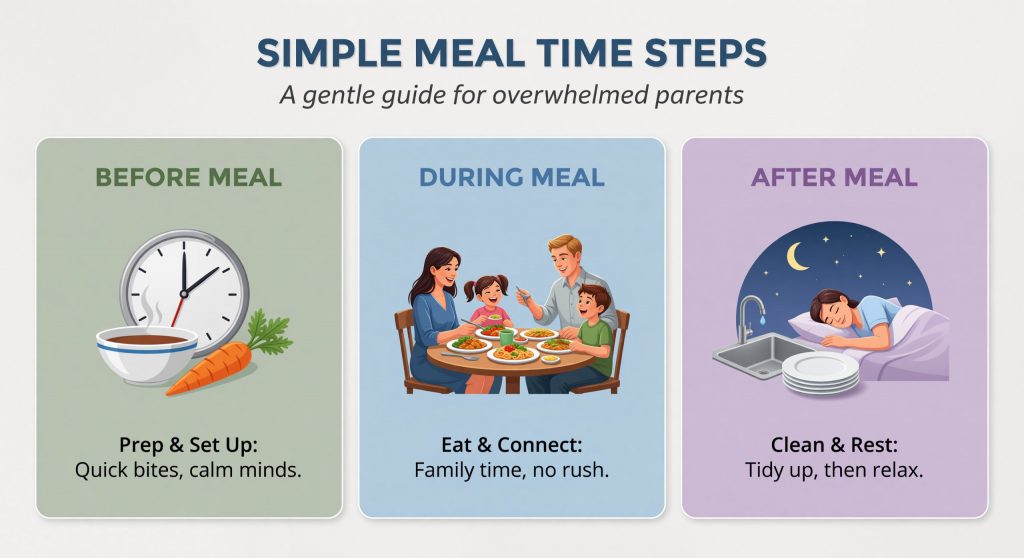
Before the Meal
Give a five-minute warning so kids can transition. Avoid snacks for at least 90 minutes before meals. Set the table together if possible involvement helps picky eaters feel more invested. Take three deep breaths yourself. Your energy affects the whole meal.
During the Meal
Sit down together, even if it’s only for ten minutes. Put a small portion of everything on everyone’s plate, including the picky eater. Don’t comment on what or how much anyone eats. Talk about literally anything except the food school, silly stories, weekend plans. Let kids serve themselves when they’re old enough, even if they choose only one item. Stay seated for a set amount of time (10-20 minutes), then clear plates without judgment.
After the Meal
Don’t offer alternatives if they didn’t eat. Remind them calmly when the next meal or snack will be. Resist the urge to debrief about what they ate or didn’t eat. Clean up together and move on with your day.
Real-Life Example
My friend Jake was at his wit’s end with his three-year-old Mia, one of the pickiest eaters he’d ever encountered. She’d eaten only chicken nuggets, applesauce, and crackers for three weeks straight. Every dinner was a fight. We talked, and he committed to this approach: family dinners with no pressure, always including one safe food, zero commentary.
The first week, Mia ate only the crackers on her plate. Jake bit his tongue and stayed neutral. Week two, she touched a green bean, then put it down. Week four, she licked a piece of chicken from a new recipe. By week eight, she was eating five new foods in rotation. Not perfect variety, but massive progress for a severe picky eater. The key? Jake stopped making eating Mia’s job and started making it her choice.
Trust & Safety: An Important Note
Everything in this article is educational information based on child development research and feeding expert guidance on working with picky eaters, not medical advice. Picky eating is usually a completely normal part of toddler development that resolves naturally over time.
That said, I’m not a doctor, and this article can’t replace the personalized guidance your pediatrician can provide. If you have specific concerns about your child’s growth, nutrition, or feeding behaviors, please schedule a visit with your healthcare provider. They know your child’s individual health history and can give you tailored recommendations for managing picky eaters.
Organizations like the American Academy of Pediatrics and HealthyChildren.org offer additional evidence-based resources on child nutrition and development if you’re looking for more expert information.
Your instincts matter. If something feels off, it’s always okay to ask for professional support.
Quick Summary: Understanding Picky Eaters
- The Phase: Common in ages 1–5, picky eaters are usually going through a normal developmental stage that resolves by school age.
- Best Approach: Use low-pressure exposure, model healthy habits, and avoid short-order cooking or food rewards.
- When to Help: Seek pediatric guidance if the child loses weight, eats fewer than 20 foods, or shows extreme distress.
Frequently Asked Questions
Is picky eating normal for toddlers?
Yes, absolutely. Most children go through phases of being picky eaters between ages 1-5. It’s a normal part of development related to growing independence, changing appetites, and cautiousness around new things. While frustrating for parents, picky eating is rarely a cause for concern unless accompanied by weight loss or extreme food limitations.
How long does picky eating last?
There’s no set timeline for how long picky eaters remain selective, but most kids start naturally expanding their preferences between ages 4-8. Some children remain cautious eaters longer, and that’s okay too. The duration often depends less on the child and more on how pressure-free and positive mealtimes remain. Patience and consistency matter more than quick fixes when raising picky eaters.
Should I force my child to eat vegetables?
No. Forcing creates negative associations with food and often makes picky eaters even more resistant. Instead, regularly serve vegetables alongside foods they accept, eat them yourself, and stay neutral when they refuse. It can take 15-20 exposures before picky eaters try a new food. Keep offering without pressure, and trust the process.
Can picky eating cause nutritional problems?
In most cases, no. Toddlers are surprisingly good at getting what they need nutritionally, even from limited diets. Many picky eaters still consume adequate calories and nutrients through fortified foods, variety over time, and supplements if recommended by a pediatrician. Severe restriction affecting growth or development is uncommon and would warrant professional evaluation.
What if my toddler only eats carbs?
Many picky eaters prefer carbohydrates they’re familiar, easy to chew, and provide quick energy. Continue offering protein and vegetables at meals without pressure. Ensure they’re actually hungry at mealtimes by limiting snacking. If this pattern persists for months and you’re concerned about nutrition or growth, discuss it with your pediatrician, but know that most carb-heavy phases are temporary.
You’ve Got This
Listen, I know you’re tired.
I know you’ve probably tried seventeen different tactics this week alone, and you’re lying awake wondering if your picky eaters are getting enough nutrition.
Take a deep breath.
You are not failing. You are simply parenting through one of the most genuinely challenging phases of childhood.
Here is the truth: Dealing with picky eaters isn’t about finding a magic trick to make them love broccoli overnight. It’s about playing the long game.
Remember these three things when the days get hard:
- Progress isn’t linear: Some weeks are breakthroughs; others are back to square one. That is normal.
- Consistency is key: Your routine matters more than what they actually swallowed today.
- The Vibe > The Food: Your goal is a stress-free table, not a clean plate.
Keep showing up with balanced meals. Keep your reactions neutral. And on the nights when dinner ends up being “crackers and chaos,” give yourself some grace.
Your toddler is learning so much right now how to be independent, how to trust their body, how to navigate their world. Food is just one piece of that bigger picture. When the sibling fighting is driving you nuts and the picky eating feels like too much, remember that all these challenges are temporary.
You’re still giving them something invaluable: a parent who cares enough to keep trying. You’ve got this! ❤️